
In embedded systems design, sustaining optimal microcontroller performance over the full lifecycle of a product is one of the most demanding engineering challenges. Whether you are developing industrial automation equipment, consumer electronics, or medical devices, the microcontroller at the heart of your design must operate reliably, efficiently, and consistently under varying environmental and operational conditions. Performance degradation is rarely dramatic — it tends to creep in through poor firmware management, thermal stress, improper power supply design, or insufficient testing protocols. Understanding how to proactively maintain microcontroller performance is therefore not optional — it is foundational to product longevity and system integrity.
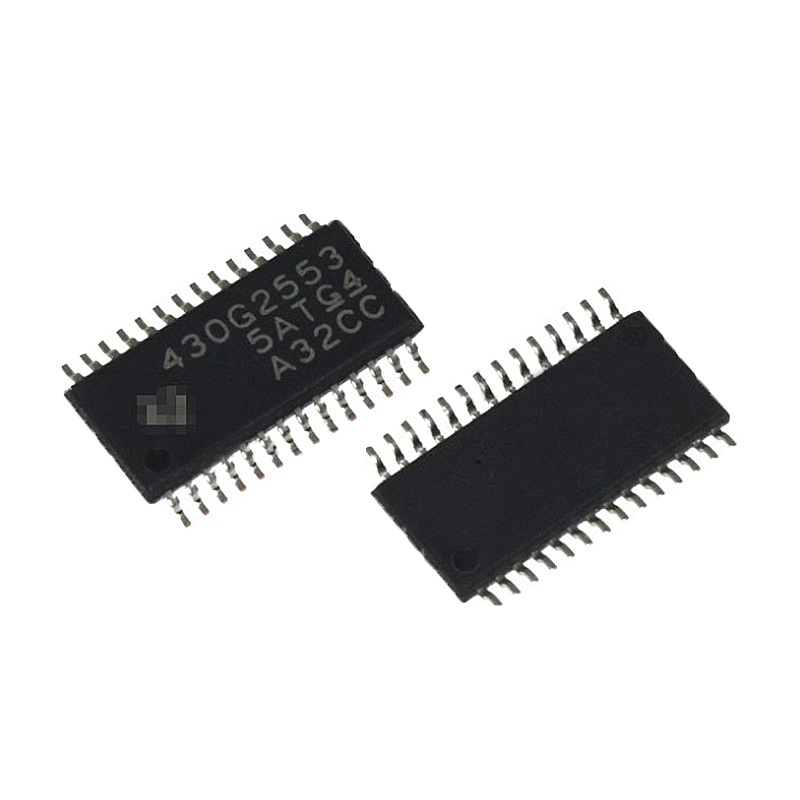
This guide is designed for engineers, product designers, and technical managers who work with embedded systems and need a structured, practical approach to preserving microcontroller performance throughout development, production, and field deployment. From firmware optimization to hardware-level considerations, each dimension of maintenance plays a distinct role in ensuring your microcontroller continues to deliver the processing speed, power efficiency, and responsiveness your application demands. This article covers all critical maintenance dimensions with actionable depth.
The microcontroller operates at a clock frequency that governs how quickly it can execute instructions. Maintaining optimal clock configuration is one of the first performance considerations. Running a microcontroller at unnecessarily high frequencies not only wastes power but can introduce timing instability, particularly in systems where the power supply cannot cleanly support sustained high-frequency operation. Engineers must evaluate whether the application truly demands maximum clock speed or whether dynamic frequency scaling offers a better performance-power tradeoff.
Clock jitter, caused by noise on power rails or poor PCB layout, can degrade microcontroller performance even when nominal frequency appears correct. Using proper decoupling capacitors close to the power pins and ensuring a clean ground plane are essential practices that directly affect clock signal integrity. When clock signals become unstable, the microcontroller may exhibit unpredictable execution timing, increased interrupt latency, and potential system faults.
In systems using external crystal oscillators, the oscillator circuit must be correctly loaded according to the datasheet specifications. Incorrect load capacitance or a damaged crystal can cause the microcontroller to operate slightly off-frequency, which may not cause immediate failure but will lead to drift in time-sensitive operations such as communication protocols and real-time task scheduling.
Memory management is a frequently overlooked dimension of microcontroller performance maintenance. Embedded systems typically operate with limited flash and RAM resources, and poor code structure can quickly consume these resources in ways that impair execution speed. Heap fragmentation in dynamically allocated memory, stack overflows, and inefficient use of data structures all reduce the effective performance of the microcontroller over time.
Developers should regularly profile memory usage as part of their software maintenance cycle. Tools that report stack high-water marks, heap fragmentation levels, and instruction cache hit rates provide invaluable insight into whether the microcontroller is approaching its operational limits. Catching memory pressure early allows engineers to refactor code before it creates runtime instability.
Code bloat — the gradual addition of features and patches without architectural discipline — is another threat to long-term microcontroller performance. Each new feature added to firmware should be evaluated for its memory and cycle footprint. Unused library functions, redundant interrupt handlers, and overlapping peripheral initialization routines all add unnecessary burden to the microcontroller's execution environment.
Interrupt-driven architectures are central to responsive embedded systems, but poorly managed interrupts are a primary cause of microcontroller performance degradation. When interrupt service routines are excessively long, they delay other time-critical operations and can cause scheduling collisions in real-time operating system environments. Keeping ISRs short, setting only flags within them, and deferring processing to the main loop or a task queue is a discipline that must be consistently maintained.
Interrupt priority assignment is another area requiring careful maintenance. As firmware evolves through multiple revisions, new peripherals and communication interfaces are often added without revisiting the original priority hierarchy. This can result in a microcontroller where low-priority interrupts inadvertently block high-priority time-sensitive tasks, introducing latency that was not present in earlier firmware versions.
Regular interrupt profiling — measuring actual interrupt frequency, duration, and nesting depth during real operational scenarios — helps engineers detect performance drift before it manifests as system-level symptoms. Maintaining a documented interrupt map that is updated with each firmware revision ensures that the microcontroller's interrupt architecture remains intentional rather than accumulating by accident.
Firmware updates are essential for fixing bugs and adding capabilities, but each update cycle represents a risk to microcontroller performance if not managed rigorously. Every patch should be benchmarked against the previous firmware version using a standardized set of performance metrics including CPU utilization under peak load, response time to external events, and power consumption profiles. Regression testing must be a non-negotiable step in the update workflow.
In field-deployed devices, over-the-air firmware updates require special attention to ensure that the update process itself does not corrupt the microcontroller's flash memory or leave the device in an inconsistent state. Implementing robust bootloader logic with checksum verification and rollback capability protects both device availability and long-term performance integrity.
Versioning discipline — maintaining a clear record of what changed in each firmware release and why — supports long-term performance maintenance by enabling engineers to trace performance anomalies back to specific code changes. This is especially important in products with long field lifespans, where the firmware may go through dozens of revisions over several years.
Heat is one of the most destructive forces acting on a microcontroller in continuous operation. Elevated junction temperatures reduce carrier mobility in semiconductor materials, which directly slows transistor switching speed and increases current leakage. Over time, sustained high temperatures cause electromigration and oxide degradation that permanently reduce the microcontroller's reliable operating margin.
Thermal management begins at the PCB level. Ensuring adequate copper pours around the microcontroller package, using thermally conductive substrates in high-power environments, and positioning heat-generating components away from the microcontroller are all design-time decisions with long-term maintenance implications. Systems operating in high ambient temperature environments may require active cooling or additional thermal interface materials.
In production environments, thermal imaging during burn-in testing can identify PCB assembly anomalies that create localized hot spots near the microcontroller. Catching these issues before product deployment prevents premature performance degradation in the field and reduces warranty return rates. Thermal monitoring in the final product, using on-chip temperature sensors where available, enables proactive intervention before damage occurs.
The power supply feeding the microcontroller has a direct and immediate effect on performance. Voltage droop during peak current demand — caused by insufficient bulk capacitance or high-impedance power traces — can cause the microcontroller to reset unexpectedly or execute incorrect instructions. Brown-out detection circuits must be properly configured to match the specific minimum operating voltage of the chosen microcontroller variant.
Switching noise from nearby power conversion circuits can couple into the microcontroller's analog circuits and digital interfaces, causing measurement errors and communication faults. Layout separation, proper filtering, and the use of ferrite beads on power supply lines are maintenance-relevant design disciplines that should be revisited during any hardware revision cycle.
Aging effects in electrolytic capacitors within the power supply stage can increase output ripple over time, gradually degrading the power quality seen by the microcontroller. In long-field-life products, scheduled power supply component inspection or replacement schedules may be warranted to maintain the clean power environment the microcontroller requires for sustained performance.
Effective maintenance of microcontroller performance requires measurable reference points. At project launch, engineers should establish and document a comprehensive performance baseline that includes key metrics such as boot time, task execution durations, interrupt response latency, power consumption at various operating modes, and communication throughput on all active interfaces. These baselines serve as the reference against which any future changes are evaluated.
Without a documented baseline, subtle performance degradation goes undetected until it becomes a user-visible problem. A microcontroller that boots 200 milliseconds slower after a firmware update, or one that consumes 15% more current under identical workloads, represents measurable degradation that should trigger investigation. Automated test frameworks that continuously monitor these metrics are a significant investment with substantial long-term returns.
Performance baseline documentation should be version-controlled alongside the firmware and hardware design files. This ensures that when a performance regression is detected, engineers have a complete audit trail of changes across software and hardware that can be systematically analyzed to isolate the root cause. This is particularly valuable in collaborative development environments where multiple engineers contribute to the microcontroller firmware.
Short-duration functional testing is insufficient for validating long-term microcontroller performance in embedded systems. Stress testing — subjecting the device to maximum workload, extreme temperature, voltage edge cases, and high-frequency external events simultaneously — reveals performance margins that only become relevant after extended operation. Products that pass functional testing but fail stress testing will generate field returns.
Long-duration soak tests, where a device runs continuously for hundreds or thousands of hours under realistic operating conditions, are the most reliable method for detecting slow-developing performance issues. Memory leaks, timer drift, communication buffer overruns, and flash wear effects all manifest over time in ways that short tests cannot capture. Scheduling periodic long-duration tests as part of the product maintenance program ensures that these failure modes are identified and addressed proactively.
Automated test systems that log microcontroller performance metrics continuously during soak tests provide trend data that can be visualized and analyzed for early warning signs. A gradual upward trend in task execution time, for example, may indicate a memory leak or a slowly accumulating interrupt backlog that will eventually cause a system fault. Catching these trends early is the essence of performance maintenance in embedded systems.
Firmware should be reviewed for performance implications at every release cycle, not just when problems are reported. Establishing performance benchmarks at baseline and running regression tests with each new build ensures that any microcontroller performance degradation introduced by code changes is detected immediately. For long-lived products, a formal performance audit at least once per year is also advisable even without active development cycles.
The most common causes include thermal stress from inadequate heat dissipation, power supply instability that causes voltage droop or excessive ripple, firmware code growth that increases CPU load over time, and poorly managed interrupt architectures that accumulate latency as features are added. Flash memory wear in systems with high write frequency can also reduce execution performance on a microcontroller that relies on in-application programming routines.
Thermal damage to a microcontroller is generally not recoverable because it involves physical changes to semiconductor structures including electromigration, oxide thinning, and bond wire degradation. Prevention through proper thermal design is far more effective than any recovery strategy. If thermal damage is suspected, the affected microcontroller should be replaced and the root thermal cause corrected before deploying the replacement unit.
PCB layout has a direct and lasting effect on microcontroller performance. Poor layout causes power rail noise, ground bounce, cross-talk between high-speed signals, and thermal accumulation — all of which reduce the reliability and precision of microcontroller operation. Investing in layout review as part of the hardware maintenance process, particularly when adding new peripherals or modifying power distribution, is essential for sustaining performance throughout the product's operational life.