
Modern electronic devices demand increasingly sophisticated power management solutions to handle multiple voltage rails, optimize energy efficiency, and minimize board space. Multi-output power management integrated circuits, commonly known as multi-output PMICs, have emerged as critical components in addressing these complex requirements across consumer electronics, industrial equipment, automotive systems, and telecommunications infrastructure. These specialized integrated circuits consolidate multiple voltage regulators, power switches, and control functions into a single package, fundamentally transforming how engineers approach power distribution architecture in contemporary electronic designs.
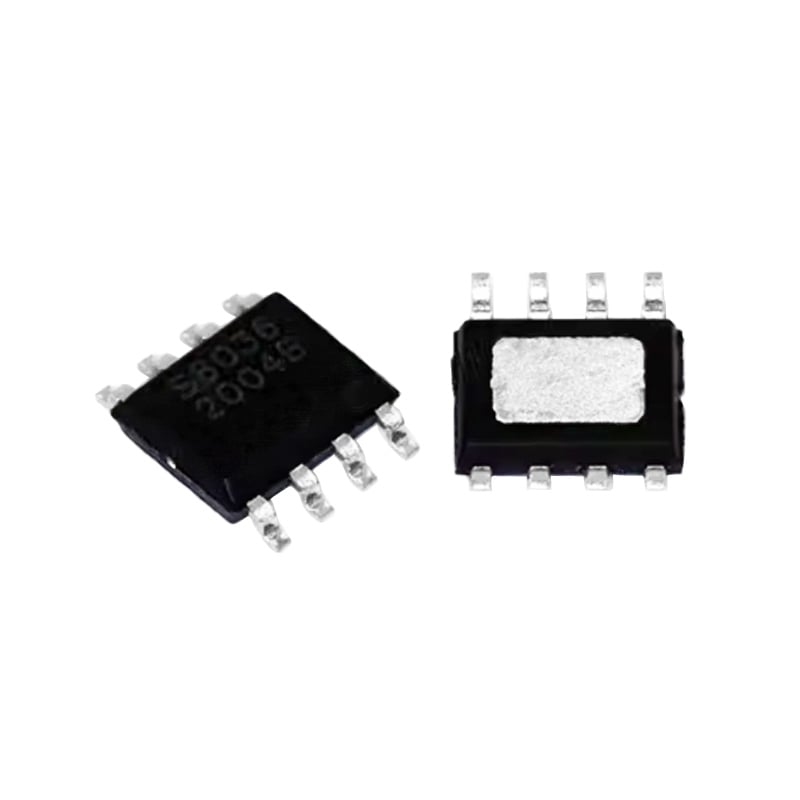
The advantages offered by multi-output PMICs extend far beyond simple power conversion, encompassing significant improvements in system reliability, thermal performance, design flexibility, and total cost of ownership. Understanding these benefits becomes essential for hardware designers, product managers, and procurement professionals seeking to optimize their electronic systems while meeting stringent market demands for compact form factors, extended battery life, and enhanced functionality. This comprehensive examination explores the specific advantages that make multi-output PMICs indispensable in modern electronics development and deployment.
One of the most immediately apparent advantages of multi-output PMICs lies in their ability to drastically reduce the physical footprint required for power management circuitry. Traditional discrete power supply designs necessitate separate regulator ICs, inductors, capacitors, and support components for each voltage rail, consuming substantial board real estate. Multi-output PMICs integrate multiple voltage regulators within a single package, eliminating redundant components and consolidating power management functions into a compact solution that can reduce total power supply footprint by fifty to seventy percent compared to discrete implementations.
This space consolidation proves particularly valuable in applications where miniaturization drives competitive advantage, such as wearable devices, smartphones, IoT sensors, and portable medical equipment. By freeing up valuable PCB area, multi-output PMICs enable designers to incorporate additional features, increase battery capacity, or achieve smaller overall product dimensions. The integrated approach also simplifies board layout complexity, reducing the number of power planes, routing layers, and interconnections required to distribute power throughout the system, which directly translates to lower manufacturing costs and improved design reliability.
Multi-output PMICs deliver significant thermal management advantages through their integrated architecture. When multiple discrete regulators operate independently on a PCB, each generates localized heat that requires individual thermal consideration, potentially creating hotspots that compromise system reliability or necessitate additional cooling infrastructure. Multi-output PMICs concentrate power conversion functions within a single thermal domain, allowing for more efficient heat dissipation through shared thermal paths, integrated thermal shutdown protection, and optimized package thermal resistance characteristics.
Advanced multi-output PMICs incorporate sophisticated thermal management features including dynamic thermal regulation, power stage sequencing to distribute thermal load, and integrated temperature sensors that enable adaptive performance optimization. These thermal advantages extend system operating temperature ranges, improve reliability in harsh environments, and reduce or eliminate the need for external heatsinks or forced air cooling. The consolidated thermal profile also simplifies thermal modeling during the design phase, accelerating development cycles and reducing the risk of thermal-related field failures that plague systems with distributed discrete power supplies.
Multi-output PMICs provide critical advantages in power sequencing and supervision that directly impact system reliability and operational stability. Complex electronic systems containing FPGAs, processors, memory devices, and peripheral interfaces require precisely controlled power-up and power-down sequences to prevent latch-up conditions, data corruption, or component damage. Multi-output PMICs incorporate programmable sequencing engines that coordinate the timing and order of multiple voltage rails according to system requirements, ensuring proper initialization and shutdown without requiring external sequencing controllers or complex discrete logic.
This integrated sequencing capability eliminates timing uncertainties and voltage relationship issues that can occur when using independent regulators with uncoordinated startup characteristics. multi-output PMICs typically include voltage monitoring functions that continuously supervise each output rail, triggering system resets or protective shutdowns if any voltage deviates from acceptable operating windows. This comprehensive power integrity monitoring prevents cascading failures, protects downstream components from overvoltage or undervoltage conditions, and enables sophisticated fault diagnosis capabilities that simplify troubleshooting and reduce field service costs.
The consolidated architecture of multi-output PMICs significantly reduces the interconnection complexity inherent in systems using multiple discrete power supplies. Each discrete regulator requires input power connections, output routing, feedback paths, enable signals, and ground returns, creating a dense network of power distribution traces that can introduce voltage drops, electromagnetic interference, and ground loop issues. Multi-output PMICs minimize these interconnection challenges by sharing common input supplies, ground references, and control interfaces, resulting in cleaner power distribution networks with reduced parasitic inductance and resistance.
This simplified interconnection topology delivers measurable improvements in power supply noise performance and electromagnetic compatibility. Shorter current paths reduce conducted emissions and improve transient response characteristics, while integrated layout optimization within the PMIC package minimizes magnetic coupling between switching stages that could generate crosstalk or interference. Multi-output PMICs often incorporate advanced features such as synchronized switching frequencies across multiple outputs, spread-spectrum modulation to distribute EMI energy, and integrated filtering that further enhance noise performance without requiring extensive external filtering networks that would otherwise consume additional board space and component cost.
Modern multi-output PMICs offer exceptional design flexibility through programmable configuration options that adapt to varying system requirements without necessitating hardware changes. Many multi-output PMICs feature digitally programmable output voltages, current limits, switching frequencies, and operating modes that designers can adjust through I2C, SPI, or other standard communication interfaces. This programmability enables a single PMIC design to support multiple product variants or allow field updates to optimize performance based on actual operating conditions, significantly reducing BOM complexity and inventory management challenges.
The adaptive power management capabilities inherent in advanced multi-output PMICs extend beyond simple configuration to include dynamic voltage and frequency scaling, automatic mode transitions between high-efficiency and fast-transient-response operation, and load-dependent optimization algorithms. These intelligent features allow systems to automatically balance power efficiency against performance requirements in real-time, extending battery life in portable applications while maintaining responsiveness during peak demand periods. The flexibility to fine-tune power delivery characteristics post-design also provides valuable margin for addressing unforeseen system interactions or changing specifications without requiring costly hardware revisions.
Multi-output PMICs deliver substantial time-to-market advantages by simplifying the power supply design process and reducing development iteration cycles. Designing multiple discrete regulators requires extensive analysis of component selection, stability compensation, thermal management, and layout optimization for each power rail independently, consuming significant engineering resources and extending development timelines. Multi-output PMICs provide pre-characterized, application-optimized reference designs that have undergone comprehensive validation by the semiconductor manufacturer, allowing designers to implement proven power architectures with minimal custom engineering.
The comprehensive documentation, simulation models, and development tools provided with multi-output PMICs further accelerate design cycles by reducing uncertainty and enabling rapid prototyping. Many PMIC manufacturers offer evaluation boards, configuration software, and application engineering support that help designers quickly validate power supply performance and optimize settings for specific applications. This ecosystem of design support resources dramatically reduces the technical risk associated with power management implementation, allowing engineering teams to focus resources on differentiating product features rather than solving fundamental power supply challenges that multi-output PMICs address through proven integrated solutions.
While multi-output PMICs may carry higher unit prices compared to individual discrete regulators, they typically deliver significant advantages in total system cost when accounting for all components, assembly processes, and supply chain factors. A single multi-output PMIC replaces multiple regulator ICs, numerous passive components, and associated support circuitry, substantially reducing the total bill of materials component count. Fewer components translate directly to lower procurement costs, reduced inventory carrying expenses, simplified supplier management, and decreased vulnerability to component availability issues that can disrupt production schedules.
Assembly cost advantages further enhance the economic benefits of multi-output PMICs. Each component placement operation incurs costs in automated assembly equipment time, inspection requirements, and potential defect opportunities. By consolidating multiple regulators into a single package, multi-output PMICs reduce pick-and-place operations, solder joint count, and inspection points, lowering manufacturing costs per unit while simultaneously improving production yield. The simplified assembly process also reduces manufacturing complexity, enabling faster production ramp-up and more predictable manufacturing capacity planning, particularly valuable for high-volume consumer electronics applications where cost per unit directly impacts market competitiveness.
Multi-output PMICs offer strategic supply chain advantages by consolidating multiple power management functions under a single part number from a single vendor. Traditional discrete power supply implementations require sourcing components from multiple suppliers, each with distinct lead times, minimum order quantities, and availability patterns. This supply chain fragmentation increases procurement complexity, elevates inventory costs to buffer against supply disruptions, and creates multiple points of potential production delays. Multi-output PMICs simplify vendor management by reducing the number of critical power supply components that require ongoing supplier relationships and qualification processes.
The consolidated sourcing approach enabled by multi-output PMICs also provides greater leverage in supplier negotiations and improves overall supply chain visibility. Working with fewer suppliers on higher-volume components typically results in better pricing, improved access to technical support, and enhanced responsiveness during allocation periods or capacity constraints. Additionally, qualifying a single multi-output PMIC involves less validation effort compared to qualifying multiple discrete components, accelerating time-to-production for new designs and simplifying change management processes when supply chain adjustments become necessary due to component obsolescence or cost optimization initiatives.
Multi-output PMICs achieve superior energy efficiency compared to discrete regulator implementations through architectural optimizations that leverage integrated design advantages. Shared input stages, common control circuitry, and coordinated switching strategies minimize redundant power consumption overhead that would otherwise exist in independent discrete regulators. Advanced multi-output PMICs employ techniques such as synchronized rectification, integrated power MOSFETs with optimized on-resistance characteristics, and adaptive dead-time control that maximize conversion efficiency across wide load ranges, directly extending battery runtime in portable applications or reducing heat dissipation in thermally constrained systems.
The efficiency advantages of multi-output PMICs become particularly significant during light-load conditions where many electronic systems spend considerable operational time. Discrete regulators often maintain relatively constant quiescent current regardless of output load, resulting in poor efficiency at low power levels. Multi-output PMICs incorporate advanced power-saving modes including pulse-skipping operation, burst-mode switching, and automatic transition between PWM and PFM modulation schemes that maintain high efficiency from microamp loads to full rated current. This light-load efficiency optimization proves critical in battery-powered IoT devices, wearables, and always-on systems where standby power consumption directly determines usable battery life and user experience.
Modern multi-output PMICs incorporate sophisticated power management intelligence that actively optimizes energy consumption based on real-time system operating conditions. Features such as dynamic voltage scaling allow processors and other digital loads to operate at reduced voltages during low-performance periods, significantly decreasing power consumption without compromising functionality. Multi-output PMICs can coordinate voltage adjustments across multiple rails simultaneously, ensuring proper voltage relationships while maximizing energy savings during varying workload conditions that characterize typical user interaction patterns in mobile devices and adaptive industrial equipment.
Load detection and adaptive response capabilities inherent in advanced multi-output PMICs further enhance system-level energy efficiency. These devices can automatically disable unused voltage rails, adjust switching frequencies to optimize efficiency at current load levels, and implement predictive power management algorithms that anticipate load transitions to minimize energy waste during transient conditions. The integrated monitoring capabilities within multi-output PMICs also enable system-level energy analytics, providing visibility into power consumption patterns that inform software optimization efforts and allow adaptive algorithms to learn usage patterns for proactive power management that extends battery life while maintaining responsive user experience in consumer electronics applications.
Multi-output PMICs enhance reliability through integrated power sequencing that ensures proper voltage rail timing relationships, comprehensive voltage monitoring across all outputs with coordinated fault response, and reduced interconnection complexity that eliminates potential failure points. The single-package integration also undergoes more rigorous validation testing compared to discrete component combinations, and the matched thermal characteristics across outputs prevent the timing drift and reliability degradation that can occur when discrete regulators age differently under varying thermal stress conditions.
Multi-output PMICs substantially reduce power supply design complexity by providing pre-engineered, validated solutions that eliminate the need to independently design, compensate, and optimize multiple discrete regulators. The integrated approach simplifies component selection, reduces required power electronics expertise, minimizes board layout challenges, and provides comprehensive reference designs with proven performance characteristics. This complexity reduction accelerates development timelines, reduces technical risk, and allows engineering teams to focus on application-specific functionality rather than fundamental power supply implementation details.
Multi-output PMICs serve effectively in many industrial applications, with available devices supporting output current capabilities ranging from hundreds of milliamps to several amps per rail and total power delivery exceeding fifty watts in advanced implementations. Industrial-grade multi-output PMICs incorporate extended temperature range operation, enhanced ESD protection, automotive qualification standards compliance, and robust fault handling suitable for harsh operating environments. However, very high-power applications exceeding individual PMIC capabilities may require discrete solutions or hybrid architectures combining multi-output PMICs with external power stages for specific high-current rails.
Contemporary multi-output PMICs offer extensive configuration flexibility through programmable output voltages adjustable via digital interfaces, selectable switching frequencies to optimize efficiency or minimize EMI, configurable power sequencing with user-defined timing relationships, adjustable current limits for each output rail, and operating mode selection between efficiency-optimized and transient-response-optimized operation. Many devices also support dynamic reconfiguration during operation, enabling adaptive power management strategies that respond to changing system requirements without hardware modifications, providing exceptional design reuse across product families and allowing field updates to optimize performance based on actual deployment conditions.