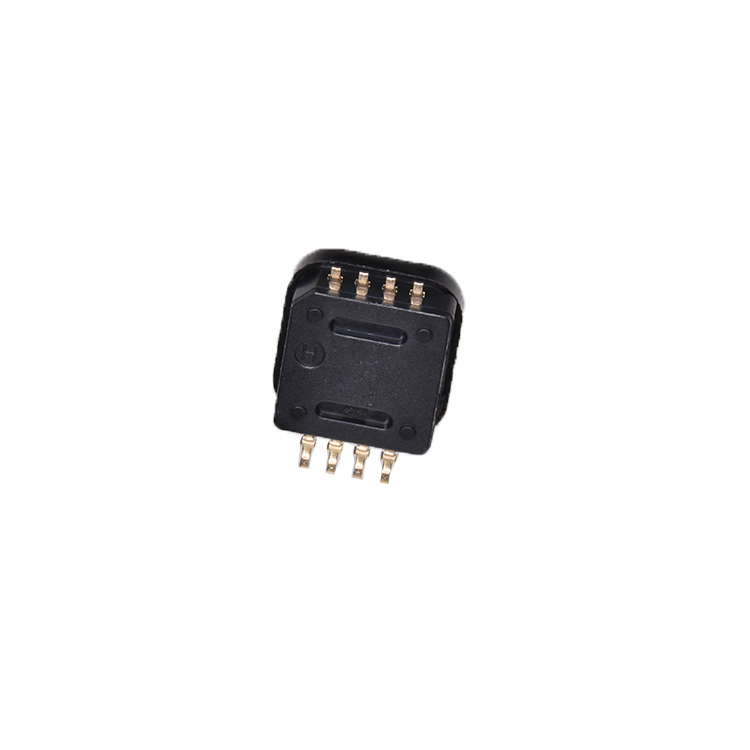
what advantages do wireless sensors offer in automation systems-1

News

Home >  News

What Advantages Do Wireless Sensors Offer in Automation Systems

Time : 2026-01-27

Driving Smarter and More Flexible Automation Infrastructure

Automation systems are evolving rapidly as industries demand higher efficiency, real-time monitoring, and scalable control architectures. Traditional wired sensing solutions, while reliable, often limit flexibility and increase installation and maintenance costs. Wireless Sensors have emerged as a transformative component in modern automation systems, enabling seamless data collection, adaptive system design, and intelligent decision-making. By eliminating physical wiring constraints, Wireless Sensors allow automation systems to become more agile, cost-efficient, and responsive to complex operational environments.

Enhancing System Flexibility With Wireless Sensors

Simplified Installation and Deployment

Wireless Sensors significantly reduce installation complexity in automation systems. Without the need for extensive cabling, Wireless Sensors can be deployed quickly across large facilities, remote locations, or moving equipment. This simplifies system expansion and reconfiguration, allowing automation engineers to adapt layouts as production needs change.

Support for Modular Automation Design

Modern automation increasingly relies on modular system architectures. Wireless Sensors align perfectly with this trend by enabling easy addition or relocation of sensing points. Automation systems built with Wireless Sensors can scale incrementally, supporting future upgrades without major structural changes.

Cost Efficiency Benefits in Automation Systems

Reduced Cabling and Infrastructure Costs

One of the most immediate advantages of Wireless Sensors is the reduction in cabling-related expenses. Traditional wired sensors require cable trays, conduits, connectors, and labor-intensive installation. Wireless Sensors remove many of these cost components, resulting in lower upfront investment for automation projects.

Lower Maintenance and Downtime Costs

Cabling failures are a common source of maintenance issues in automation systems. Wireless Sensors reduce dependence on physical connections, minimizing wear-related faults. With fewer mechanical failure points, maintenance frequency decreases and system uptime improves, supporting more consistent production output.

Improved Data Accessibility and Real-Time Monitoring

Continuous Data Transmission

Wireless Sensors enable continuous and real-time data transmission across automation networks. This constant flow of information allows automation systems to respond quickly to changes in operating conditions. Real-time feedback enhances process accuracy, quality control, and system responsiveness.

Remote Monitoring Capabilities

Automation systems equipped with Wireless Sensors support remote monitoring without physical access to equipment. Operators and engineers can analyze system performance, environmental conditions, and equipment status from centralized control rooms. This capability is especially valuable for large-scale plants and distributed operations.

Enhanced Reliability Through Redundant Communication

Network Resilience and Fault Tolerance

Modern Wireless Sensors are designed to operate within robust communication networks that support redundancy. If one communication path is disrupted, data can be rerouted through alternative channels. This resilience improves overall system reliability and reduces the risk of data loss in automation environments.

Stable Performance in Harsh Conditions

Wireless Sensors used in industrial automation are engineered to perform reliably under harsh conditions such as vibration, temperature extremes, and electromagnetic interference. By avoiding physical wiring exposure, Wireless Sensors often demonstrate greater long-term stability in demanding industrial settings.

DSC_5387.JPG

Supporting Advanced Automation Intelligence

Integration With Control and Analytics Systems

Wireless Sensors integrate seamlessly with programmable logic controllers, distributed control systems, and industrial analytics platforms. The data collected by Wireless Sensors feeds directly into automation algorithms, enabling predictive maintenance, adaptive control, and performance optimization.

Enabling Data-Driven Decision Making

Automation systems increasingly rely on data insights rather than fixed logic. Wireless Sensors provide high-resolution, real-time data that supports trend analysis and anomaly detection. This data-driven approach allows automation systems to optimize operations proactively rather than reactively.

Energy Efficiency and Power Management Advantages

Low-Power Sensor Technologies

Advancements in low-power electronics have made Wireless Sensors highly energy efficient. Many Wireless Sensors operate for extended periods on small batteries or energy-harvesting technologies. This efficiency reduces operational costs and supports deployment in locations without direct power access.

Optimized Resource Utilization

Automation systems using Wireless Sensors can optimize energy usage by monitoring equipment performance and environmental conditions. Accurate sensor data enables systems to adjust operations dynamically, reducing unnecessary energy consumption and supporting sustainability goals.

Increased Safety and Risk Reduction

Reduced Physical Hazards

Removing extensive wiring from automation environments reduces physical hazards such as tripping risks and cable damage. Wireless Sensors contribute to cleaner, safer workspaces, especially in complex industrial facilities.

Improved Monitoring of Critical Parameters

Wireless Sensors enhance safety by continuously monitoring critical parameters such as pressure, temperature, vibration, and gas levels. Automation systems can trigger alerts or shutdowns when abnormal conditions are detected, reducing the risk of accidents and equipment damage.

Scalability for Expanding Automation Systems

Easy Expansion of Sensor Networks

As automation systems grow, Wireless Sensors make it easy to expand sensing coverage. New Wireless Sensors can be added to the network without disrupting existing operations. This scalability supports long-term growth and evolving production requirements.

Adaptation to Multi-Site Operations

For organizations managing multiple facilities, Wireless Sensors provide consistent monitoring across sites. Automation systems can standardize data collection and reporting, improving operational visibility and coordination at a global level.

Long-Term Value and Future Readiness

Compatibility With Smart Industry Trends

Wireless Sensors are a foundational element of smart manufacturing and Industry 4.0 initiatives. Their ability to connect seamlessly with cloud platforms, edge computing systems, and artificial intelligence tools ensures that automation systems remain future-ready.

Supporting Continuous System Improvement

Automation systems benefit from continuous performance improvement when powered by Wireless Sensors. Ongoing data collection enables benchmarking, optimization, and iterative enhancements that drive long-term efficiency gains.

FAQ

Frequently Asked Questions About Wireless Sensors in Automation Systems

What types of automation systems benefit most from Wireless Sensors

Manufacturing, process automation, building automation, and energy management systems benefit greatly due to their need for flexible deployment and real-time monitoring.

Are Wireless Sensors reliable for industrial automation

Wireless Sensors are designed with industrial-grade communication protocols and redundancy features, making them reliable for demanding automation applications.

How do Wireless Sensors reduce automation system costs

Wireless Sensors reduce costs by eliminating extensive cabling, lowering installation labor, minimizing maintenance needs, and improving system uptime.

Can Wireless Sensors support large-scale automation networks

Wireless Sensors are highly scalable and can support large networks through mesh or hierarchical communication architectures.

PREV : None

NEXT : Which Applications Require High-Power Resistors for Reliability

Get a Free Quote

Our representative will contact you soon.
Email
Name
Company Name
Message
0/1000
Attachment
Up to 3 files,more 30mb,suppor jpg、jpeg、png、pdf、doc、docx、xls、xlsx、csv、txt、stp、step、igs、x_t、dxf、prt、sldprt、sat、rar、zip