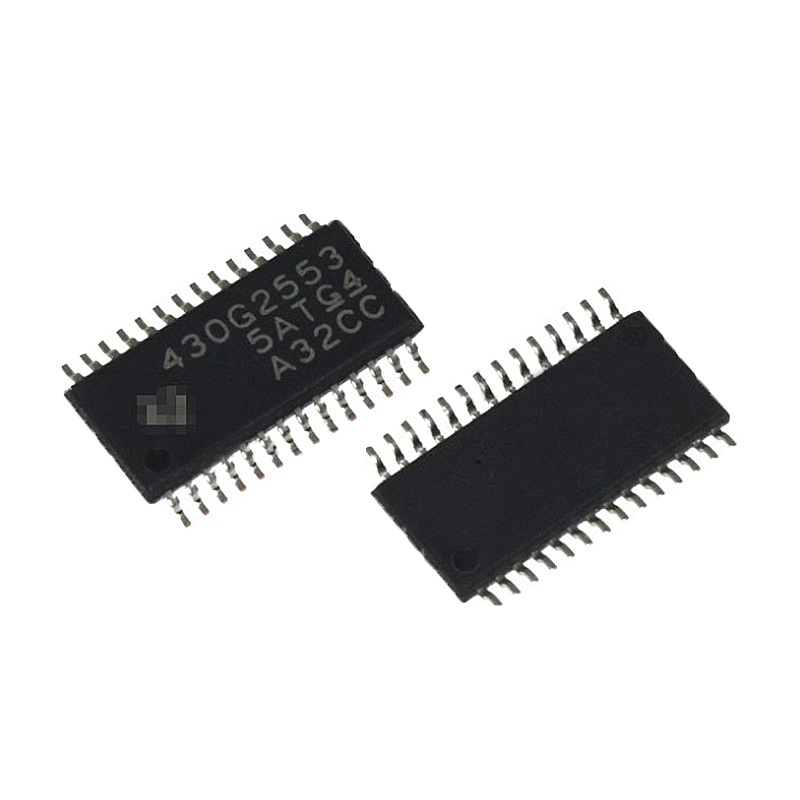
what features make a microcontroller ideal for automation-1

News

Home >  News

What Features Make a Microcontroller Ideal for Automation

Time : 2025-12-05

Modern industrial automation systems rely heavily on sophisticated control units that can process data, manage peripherals, and execute complex algorithms with precision and reliability. The microcontroller serves as the central nervous system in countless automation applications, from manufacturing equipment to smart building systems. Understanding which features distinguish an exceptional microcontroller from mediocre alternatives is crucial for engineers and system designers who demand optimal performance, energy efficiency, and long-term stability in their automated solutions.

microcontroller

Processing Power and Architecture Fundamentals

Core Architecture Design Considerations

The architectural foundation of a microcontroller determines its ability to handle complex automation tasks efficiently. Advanced RISC architectures provide streamlined instruction sets that enable faster execution cycles and reduced power consumption compared to traditional CISC designs. Modern automation-grade microcontrollers typically feature 16-bit or 32-bit processing capabilities, allowing them to manage multiple concurrent operations while maintaining real-time responsiveness. The instruction pipeline depth and cache memory implementation directly influence the system's ability to process interrupt-driven events that are common in industrial automation environments.

Clock speed optimization plays a vital role in automation performance, but raw frequency alone does not determine effectiveness. A well-designed microcontroller balances processing speed with power efficiency through dynamic clock scaling and sleep mode capabilities. This balance becomes particularly important in battery-powered automation devices or systems operating in remote locations where power consumption directly impacts operational costs and maintenance requirements.

Memory Architecture and Data Handling

Effective memory management separates professional-grade microcontrollers from consumer-level alternatives in automation applications. Flash memory capacity must accommodate both program storage and over-the-air update capabilities, while RAM allocation needs to handle data buffers, communication protocols, and real-time processing requirements simultaneously. Advanced microcontrollers implement memory protection units that prevent unauthorized access and ensure system stability even when handling multiple concurrent processes.

Data throughput capabilities determine how effectively a microcontroller can manage sensor inputs, process control algorithms, and communicate with external systems. High-performance automation microcontrollers feature dedicated direct memory access controllers that can transfer data between peripherals and memory without CPU intervention, maintaining system responsiveness during intensive data operations.

Communication and Connectivity Features

Industrial Communication Protocols

Automation systems require robust communication capabilities that support multiple industrial protocols simultaneously. A versatile microcontroller incorporates hardware-accelerated support for protocols such as CAN, Modbus, Ethernet, and various fieldbus standards. This hardware acceleration reduces CPU overhead while ensuring deterministic communication timing that is essential for coordinated automation operations.

Wireless connectivity integration has become increasingly important as automation systems embrace Industry 4.0 principles and Internet of Things connectivity. Modern microcontrollers often include built-in WiFi, Bluetooth, or cellular communication capabilities, enabling remote monitoring, predictive maintenance, and cloud-based analytics integration without requiring additional communication modules.

Real-Time Communication Capabilities

Time-sensitive automation applications demand microcontrollers with hardware-based real-time communication features. Advanced units implement time-stamping capabilities and synchronization protocols that ensure coordinated operation across distributed automation networks. These features become particularly critical in applications such as motion control systems where microsecond-level timing precision affects system performance and safety.

Error detection and correction mechanisms within communication subsystems help maintain data integrity in challenging industrial environments. Robust microcontrollers incorporate automatic retransmission protocols, checksum verification, and fault isolation features that prevent communication errors from cascading through automation networks.

Input Output and Peripheral Integration

Analog Signal Processing Capabilities

Industrial automation relies extensively on analog sensor inputs that require precise conversion and processing. High-quality microcontrollers feature multiple analog-to-digital converters with varying resolution levels, from standard 12-bit converters for general measurements to specialized 24-bit converters for precision applications. Programmable gain amplifiers and differential input capabilities enable direct connection to various sensor types without external signal conditioning circuits.

Digital-to-analog output capabilities allow microcontrollers to generate control signals for actuators, variable frequency drives, and process control equipment. Advanced implementations include multiple DAC channels with independent update rates and output ranges, enabling complex control strategies that optimize system performance across varying operational conditions.

Digital Interface Flexibility

Versatile digital input and output configurations accommodate the diverse interface requirements found in automation systems. Configurable GPIO pins can adapt to different voltage levels and current requirements while providing programmable pull-up and pull-down resistors for reliable signal integrity. Advanced microcontrollers implement programmable logic controllers within the silicon that can handle simple logic operations independently of the main processor.

Specialized timer and counter modules enable precise timing control for automation sequences, pulse-width modulation for motor control, and frequency measurement for monitoring rotating equipment. Multiple independent timer channels with microsecond resolution provide the timing accuracy required for coordinated automation operations and safety-critical applications.

Power Management and Efficiency

Dynamic Power Optimization

Energy efficiency directly impacts the total cost of ownership for automation systems, particularly in applications with hundreds or thousands of distributed control nodes. Leading microcontrollers implement multiple power-saving modes that can reduce current consumption by orders of magnitude while maintaining essential monitoring functions. Wake-up capabilities triggered by specific events ensure rapid response to critical conditions while preserving battery life during normal operations.

Intelligent power management extends beyond simple sleep modes to include dynamic voltage and frequency scaling that adapts power consumption to processing demands in real-time. This capability becomes particularly valuable in applications with varying computational loads throughout operational cycles, such as batch processing equipment or seasonal automation systems.

Power Supply Flexibility

Industrial environments often present challenging power supply conditions that require robust microcontroller power management features. Wide input voltage ranges accommodate various power sources while integrated voltage regulators eliminate the need for external power conditioning circuits. Brown-out detection and reset capabilities ensure reliable operation during power fluctuations that commonly occur in industrial facilities.

Power monitoring and reporting features enable predictive maintenance strategies by tracking power consumption patterns and identifying potential issues before they cause system failures. Advanced microcontrollers can log power events and communicate this information to maintenance management systems for trend analysis and optimization.

Security and Reliability Features

Hardware Security Implementation

As automation systems become increasingly connected, security features within microcontrollers have evolved from optional additions to essential requirements. Hardware-based encryption engines provide secure communication channels that protect sensitive control data and prevent unauthorized system access. Secure boot processes verify firmware integrity during startup, preventing malicious code injection and ensuring system authenticity.

Key management and certificate storage capabilities enable implementation of comprehensive security frameworks that comply with industrial cybersecurity standards. Advanced microcontrollers incorporate tamper detection features that can identify physical security breaches and trigger appropriate protective responses to prevent data extraction or system compromise.

Fault Tolerance and Diagnostic Capabilities

Reliable automation systems require microcontrollers with comprehensive fault detection and recovery capabilities. Built-in self-test functions continuously monitor critical system parameters and can identify potential failures before they impact operations. Redundant processing elements and automatic failover mechanisms ensure continued operation even when individual components experience failures.

Comprehensive diagnostic reporting provides maintenance personnel with detailed information about system health and performance trends. Advanced microcontrollers maintain event logs and error counters that help identify recurring issues and optimize preventive maintenance schedules to minimize unplanned downtime.

Development and Programming Support

Development Environment Integration

Professional automation projects require microcontrollers with robust development tool ecosystems that accelerate time-to-market and reduce development costs. Comprehensive integrated development environments provide advanced debugging capabilities, real-time code analysis, and performance profiling tools that help engineers optimize system performance and identify potential issues during development phases.

Code libraries and middleware components specifically designed for automation applications reduce development time by providing pre-tested implementations of common functions such as communication protocols, sensor interfaces, and control algorithms. Hardware abstraction layers enable code portability between different microcontroller variants within the same family, protecting software investment as system requirements evolve.

In-System Programming and Updates

Field-upgradeable firmware capabilities have become essential for automation systems that must adapt to changing requirements and incorporate security updates throughout their operational lifetime. Advanced microcontrollers implement secure over-the-air update mechanisms that can download, verify, and install new firmware without disrupting critical operations or requiring physical access to equipment.

Dual-bank flash memory architectures enable fail-safe firmware updates by maintaining a functional backup image during update procedures. This redundancy ensures that automation systems can recover from interrupted updates or corrupted firmware installations without requiring manual intervention or specialized recovery equipment.

FAQ

What processing speed is required for typical automation applications

Most industrial automation applications perform well with microcontrollers operating between 16 MHz and 100 MHz, depending on the complexity of control algorithms and real-time requirements. Simple sensor monitoring and basic control functions can operate effectively at lower frequencies, while advanced motion control and signal processing applications may require higher clock speeds. The key consideration is matching processing capability to application requirements while optimizing power consumption and cost.

How important is memory capacity in automation microcontrollers

Memory requirements vary significantly based on application complexity and communication protocols. Basic automation functions may require only 32KB to 128KB of flash memory, while sophisticated systems with multiple communication protocols, data logging, and over-the-air update capabilities often need 512KB or more. RAM requirements typically range from 8KB for simple applications to 64KB or higher for systems handling multiple concurrent processes and large data buffers.

What communication protocols should automation microcontrollers support

Essential communication protocols for automation microcontrollers include UART, SPI, and I2C for local device communication, plus at least one industrial protocol such as CAN, Modbus RTU, or Ethernet. Wireless capabilities such as WiFi or Bluetooth are increasingly important for remote monitoring and configuration. The specific protocol requirements depend on the automation network architecture and integration requirements of the particular application.

How do environmental factors affect microcontroller selection for automation

Industrial environments subject microcontrollers to temperature extremes, electrical noise, vibration, and humidity that require specialized designs. Automotive and industrial-grade microcontrollers typically operate across -40°C to +85°C temperature ranges with enhanced electromagnetic immunity and extended reliability specifications. Package selection, conformal coating compatibility, and component derating become critical factors for ensuring long-term reliability in challenging operational environments.

PREV : None

NEXT : How to Maintain Diode Efficiency in High-Current Systems

Get a Free Quote

Our representative will contact you soon.
Email
Name
Company Name
Message
0/1000
Attachment
Up to 3 files,more 30mb,suppor jpg、jpeg、png、pdf、doc、docx、xls、xlsx、csv、txt、stp、step、igs、x_t、dxf、prt、sldprt、sat、rar、zip