
Maintaining transistor efficiency over extended operational periods is critical for ensuring reliable performance in industrial electronics, power conversion systems, and embedded control applications. As semiconductor devices age and experience thermal cycling, electrical stress, and environmental exposure, their electrical characteristics can degrade, leading to reduced switching speed, increased power losses, and compromised system reliability. Understanding the mechanisms that affect transistor efficiency and implementing proactive maintenance strategies enables engineers and facility operators to maximize device lifespan, reduce downtime, and optimize energy consumption across mission-critical applications.
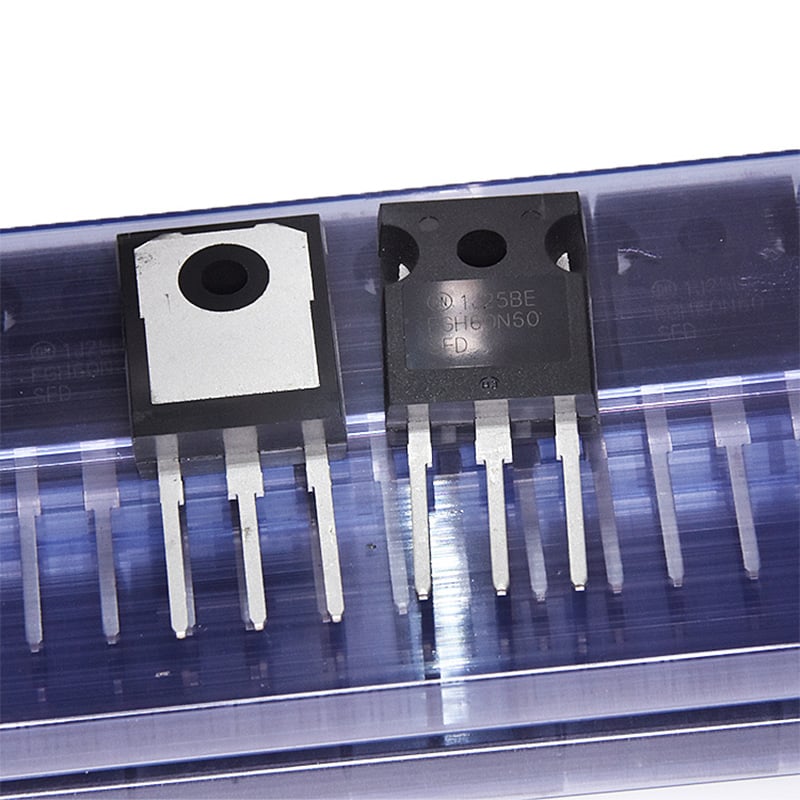
Long-term transistor efficiency depends on multiple interdependent factors including thermal management practices, electrical operating conditions, protection circuit design, and environmental control measures. Power transistors operating in switching converters, motor drives, and RF amplifiers are particularly vulnerable to efficiency degradation due to repetitive stress cycles and cumulative heat exposure. This comprehensive guide explores practical methodologies for preserving transistor efficiency throughout the device lifecycle, from initial installation through years of continuous operation, focusing on actionable strategies that address both preventive maintenance and performance monitoring requirements specific to industrial-grade semiconductor components.
Thermal stress represents the primary degradation mechanism affecting transistor efficiency in long-term applications. When junction temperatures exceed design specifications or experience rapid cycling, the semiconductor crystal structure undergoes microscopic changes that increase on-resistance and reduce switching performance. Each thermal cycle causes material expansion and contraction that gradually weakens bond wires, solder joints, and die-attach interfaces. Maintaining transistor efficiency requires strict control of peak junction temperatures, typically keeping them at least twenty to thirty degrees Celsius below the manufacturer's maximum rating. Thermal management systems must account for ambient temperature variations, load profile changes, and cooling system degradation over time to prevent efficiency losses.
The relationship between junction temperature and transistor efficiency follows an exponential pattern, where small temperature increases produce disproportionately large efficiency reductions. Operating a power transistor at elevated temperatures accelerates threshold voltage drift, increases leakage currents, and degrades carrier mobility within the semiconductor material. Industrial applications requiring sustained high efficiency must implement continuous junction temperature monitoring using either embedded thermal sensors or indirect measurement techniques based on forward voltage drop characteristics. Predictive maintenance programs that track thermal trends enable early intervention before efficiency degradation impacts system performance or causes premature device failure.
Electrical overstress events, even those below catastrophic failure thresholds, contribute to cumulative damage that gradually erodes transistor efficiency over extended use periods. Each instance of voltage overshoot, current spike, or excessive switching loss creates localized hot spots within the semiconductor die that degrade the gate oxide, metallization layers, and junction regions. Maintaining optimal transistor efficiency demands rigorous adherence to safe operating area specifications across all operating conditions, including transient events during startup, load changes, and fault conditions. Protection circuits must respond rapidly enough to prevent even brief excursions beyond rated parameters while minimizing false triggering that impacts availability.
The concept of safe operating area encompasses simultaneous voltage, current, and power limitations that define the boundary between reliable operation and accelerated degradation. Dynamic safe operating area considerations become especially important during switching transitions when transistors experience combined high voltage and high current stress. Engineers maintaining transistor efficiency in long-term applications must verify that snubber circuits, gate drive timing, and load impedance characteristics prevent trajectory paths through unsafe operating regions. Periodic verification of protection threshold settings and circuit response times helps ensure continued compliance as component tolerances shift and system characteristics evolve over years of operation.
Gate oxide degradation represents a subtle but significant threat to transistor efficiency in field-effect devices operating over extended timeframes. The thin insulating layer separating the gate electrode from the semiconductor channel experiences continuous electrical stress that gradually creates trap states and increases leakage current. This degradation manifests as threshold voltage drift, reduced transconductance, and increased switching times that collectively diminish transistor efficiency. Metal-oxide-semiconductor structures are particularly susceptible to time-dependent dielectric breakdown when subjected to sustained high gate voltages or rapid voltage transitions that create charge injection into the oxide layer.
Preserving gate oxide integrity requires careful attention to gate drive voltage levels, slew rates, and bias conditions during both active operation and standby periods. Static discharge events during maintenance activities pose particular risks, as even brief overvoltage pulses can create permanent damage that compromises long-term transistor efficiency. Implementing proper electrostatic discharge protocols, using gate voltage clamping devices, and avoiding unnecessary gate voltage excursions help maintain the electrical characteristics necessary for sustained high efficiency. Baseline characterization of threshold voltage and gate leakage current during commissioning provides reference data for detecting gradual degradation trends before they significantly impact system performance.
Effective heat sink design forms the foundation of any strategy to maintain transistor efficiency during prolonged operation. The thermal resistance path from junction to ambient must be minimized through proper heat sink selection, mounting surface preparation, and thermal interface material application. As systems age, thermal interface materials can dry out, lose contact pressure, or develop voids that increase thermal resistance and elevate operating temperatures. Regular inspection and refresh of thermal interfaces prevents gradual efficiency degradation caused by deteriorating heat transfer characteristics. Industrial environments with high vibration levels or temperature cycling require particular attention to thermal interface stability and mechanical mounting integrity.
Heat sink performance depends not only on initial design but also on maintaining unobstructed airflow and clean fin surfaces throughout the operational lifetime. Dust accumulation, corrosion, and foreign object intrusion can significantly reduce heat dissipation capacity, forcing transistors to operate at higher temperatures that compromise efficiency. Scheduled cleaning intervals based on environmental conditions help preserve thermal management effectiveness. In critical applications, monitoring heat sink surface temperatures or coolant flow rates provides early warning of thermal system degradation before transistor efficiency suffers measurably. Some advanced installations implement automated cleaning systems or protective filters that extend maintenance intervals while ensuring consistent thermal performance.
Controlling the ambient environment surrounding power electronic systems directly impacts transistor efficiency by establishing the baseline condition for all thermal calculations. Industrial facilities often experience seasonal temperature variations, localized heat sources, and inadequate ventilation that create challenging thermal environments for semiconductor devices. Maintaining transistor efficiency requires active management of enclosure temperatures through ventilation design, air conditioning capacity, and strategic equipment placement. Thermal modeling that accounts for worst-case ambient conditions ensures adequate cooling margin under all anticipated operating scenarios, preventing efficiency degradation during peak temperature periods.
Environmental management extends beyond temperature control to include humidity regulation, contaminant exclusion, and condensation prevention. High humidity levels accelerate corrosion of electrical connections and heat sink surfaces, while condensation events can cause electrical tracking that degrades insulation and creates short-circuit paths. Sealed enclosures with desiccant maintenance or positive pressure ventilation systems protect transistors from environmental factors that compromise long-term efficiency. Monitoring environmental conditions within equipment enclosures enables correlation of efficiency trends with ambient factors, supporting data-driven maintenance decisions and identifying systemic issues requiring facility-level remediation rather than component replacement.
Implementing continuous thermal monitoring systems enables proactive detection of conditions that threaten transistor efficiency before performance degradation becomes severe. Temperature sensors positioned at strategic locations including heat sink surfaces, mounting bases, and adjacent circuit boards provide real-time visibility into thermal management system effectiveness. Trending analysis comparing current thermal profiles against baseline commissioning data reveals gradual degradation patterns indicative of thermal interface problems, cooling system degradation, or increased electrical losses. Predictive maintenance programs that establish action thresholds based on thermal trend data support planned interventions that restore efficiency before unscheduled failures occur.
Advanced thermal management systems incorporate adaptive control strategies that adjust switching frequencies, modulation patterns, or load distribution based on real-time temperature feedback. These intelligent approaches maintain transistor efficiency by preventing operation at excessively high junction temperatures while maximizing utilization within safe thermal limits. Machine learning algorithms analyzing historical thermal data can identify subtle correlations between operating conditions and efficiency trends, enabling optimization of operational parameters for extended device life. Integration of thermal monitoring data with broader equipment health management systems provides comprehensive visibility into factors affecting transistor efficiency across entire facilities or distributed installations.
Gate drive circuit design and optimization significantly influence transistor efficiency and the rate of performance degradation over time. Proper gate drive voltage levels ensure complete turn-on to minimize conduction losses while avoiding excessive voltage that stresses the gate oxide. Gate resistor selection balances switching speed against electromagnetic interference and voltage overshoot, with optimal values often requiring adjustment based on specific circuit layouts and parasitic inductances. Maintaining transistor efficiency throughout extended operation demands periodic verification of gate drive characteristics, as component aging and circuit board degradation can alter drive waveforms and compromise switching performance.
Switching loss reduction techniques directly preserve transistor efficiency by minimizing heat generation during each switching transition. Soft-switching topologies, synchronized rectification, and optimized dead-time control reduce the overlap period of high voltage and high current that generates switching losses. As transistors age and their switching characteristics drift, gate drive timing parameters may require adjustment to maintain optimal efficiency. Regular characterization of turn-on and turn-off delays enables fine-tuning of control algorithms that adapt to device aging while preventing shoot-through conditions or excessive body diode conduction that waste energy and generate unnecessary heat.
Operating transistors at loads significantly below or above their optimal design point compromises efficiency and accelerates degradation processes. Light load conditions often involve operation in discontinuous conduction modes or with poor transformer utilization that reduces efficiency despite lower absolute power levels. Heavy overload conditions force transistors to handle excessive currents that increase conduction losses and junction temperatures beyond ideal ranges. Maintaining transistor efficiency requires careful attention to load matching, with system designs that either naturally operate near optimal loading or incorporate active control strategies that maintain efficient operating points across varying load conditions.
Dynamic load management systems can enhance transistor efficiency by selectively activating or deactivating parallel devices, adjusting switching frequencies, or modifying modulation depths based on instantaneous power demands. These adaptive strategies prevent individual transistors from operating in inefficient regions while distributing stress more evenly across multiple devices to reduce peak temperatures. In applications with highly variable loads, implementing efficiency-optimized control algorithms that sacrifice slight performance characteristics for improved thermal management can substantially extend transistor lifetime while maintaining overall system efficiency. Load profile analysis identifying typical operating conditions enables targeted optimization efforts that deliver maximum efficiency improvement for the actual duty cycles experienced in service.
Voltage derating represents one of the most effective strategies for preserving transistor efficiency and extending operational life in long-term applications. Operating transistors at voltages substantially below their maximum ratings reduces electric field stress within the semiconductor junctions and gate structures, slowing degradation mechanisms that accumulate over thousands of operating hours. Conservative voltage derating also provides margin to accommodate line voltage variations, inductive spikes, and switching transients without exceeding safe operating limits. While derating requires selection of higher-voltage devices with potentially higher costs and conduction losses, the reliability and efficiency benefits typically justify the investment for mission-critical applications requiring decades of service.
Snubber circuits and voltage clamping devices protect transistors from transient overvoltage events that can cause immediate damage or contribute to cumulative degradation affecting long-term efficiency. Proper snubber design balances damping effectiveness against additional power losses and circuit complexity. As systems age, capacitors in snubber circuits may degrade and require replacement to maintain protection effectiveness. Regular inspection of protection components ensures continued voltage stress limitation that preserves transistor efficiency. Some advanced designs implement active voltage clamping using auxiliary transistors or controlled energy recovery circuits that provide robust overvoltage protection while minimizing parasitic losses that would otherwise reduce system efficiency.
Establishing baseline performance metrics during system commissioning provides essential reference data for evaluating transistor efficiency trends over the operational lifetime. Initial characterization should document key parameters including on-state voltage drop, switching times, thermal resistance measurements, and efficiency mapping across the operating range. Periodic re-characterization at scheduled maintenance intervals enables quantitative assessment of degradation rates and supports data-driven decisions regarding continued operation, parameter adjustment, or component replacement. Trending analysis comparing current measurements against baseline data reveals gradual efficiency losses that might otherwise go undetected until system performance becomes noticeably compromised.
Modern test equipment and data acquisition systems facilitate rapid performance assessment without requiring extended system downtime or complex disassembly procedures. Automated test sequences can measure relevant transistor parameters during brief maintenance windows, generating comprehensive efficiency reports that track device health over time. Establishing action thresholds based on acceptable efficiency degradation levels enables proactive maintenance scheduling before transistor performance falls below minimum requirements. For critical applications, redundant systems with periodic role-swapping allow extended characterization of individual circuits while maintaining continuous operation, supporting thorough assessment of transistor efficiency trends without impacting availability.
Infrared thermal imaging provides powerful diagnostic capabilities for identifying localized heating patterns that indicate developing problems affecting transistor efficiency. Hot spots caused by poor thermal interface contact, bond wire degradation, or current crowding within semiconductor dies appear clearly in thermal images, enabling targeted remediation before widespread efficiency losses occur. Regular thermal surveys conducted during normal operation reveal temperature distribution patterns that can be compared against baseline images from commissioning or previous inspections. Significant deviations from expected thermal profiles warrant detailed investigation to determine root causes and implement corrective measures that restore optimal transistor efficiency.
Thermal imaging programs should include standardized procedures specifying camera settings, measurement distances, and environmental conditions to ensure consistency between successive inspections. Establishing temperature rise criteria relative to ambient conditions normalizes data across different operating environments and seasonal variations. Advanced analysis techniques including thermal pattern recognition and automated anomaly detection can process large datasets from facilities with hundreds or thousands of transistors, prioritizing maintenance attention on devices exhibiting abnormal thermal characteristics. Integration of thermal imaging data with electrical performance measurements provides comprehensive assessment of transistor efficiency, correlating temperature trends with measurable efficiency degradation to validate thermal management effectiveness.
Continuous monitoring of electrical parameters including voltage drops, switching waveforms, and current characteristics enables real-time assessment of transistor efficiency and early detection of degradation trends. On-state voltage measurements provide direct indication of conduction loss increases caused by bond wire resistance growth, die attach degradation, or semiconductor material changes. Comparing voltage drop measurements under standardized current conditions against historical baseline values quantifies efficiency degradation rates and supports predictive maintenance scheduling. Modern control systems can incorporate parameter monitoring functions that automatically log relevant data during normal operation without requiring dedicated test equipment or interrupting production activities.
Switching waveform analysis reveals subtle changes in transistor behavior that impact efficiency before they manifest as obvious performance problems. Increased switching times, excessive ringing, or voltage overshoot patterns indicate developing issues with gate drive circuits, parasitic elements, or the transistors themselves. High-speed waveform capture during commissioning establishes baseline switching characteristics that subsequent measurements can be compared against to identify degradation trends. Automated analysis algorithms can process waveform data to extract key metrics including rise times, fall times, and switching loss estimates that directly relate to transistor efficiency. Trending these parameters over months and years of operation provides early warning of conditions requiring maintenance intervention to preserve optimal efficiency throughout the system lifetime.
Mechanical vibration and physical stress affecting transistor mounting systems can significantly impact long-term efficiency through multiple degradation pathways. Vibration-induced fatigue gradually loosens mounting hardware, creating gaps in thermal interfaces that increase thermal resistance and elevate operating temperatures. Repetitive mechanical stress also damages solder joints, bond wires, and die attach interfaces within transistor packages, increasing electrical resistance and reducing current handling capability. Applications involving mobile equipment, reciprocating machinery, or high-vibration industrial environments require particular attention to mechanical design, using vibration-isolating mounts, lock washers, and periodic inspection protocols that detect and correct loosening before transistor efficiency suffers.
Thermal cycling compounds mechanical stress effects by creating differential expansion between materials with different thermal expansion coefficients. Aluminum heat sinks, copper base plates, and semiconductor silicon expand at different rates during temperature changes, creating shear forces at interfaces and within package structures. Over thousands of thermal cycles, these forces cause progressive damage that manifests as increased thermal resistance and electrical losses. Maintaining transistor efficiency in thermally cycled applications requires design approaches that accommodate differential expansion through compliant mounting systems, stress-relief features, and materials selection that minimizes expansion mismatches. Regular torque verification of mounting hardware ensures continued mechanical integrity and optimal thermal contact throughout the operational lifetime.
Environmental contamination and corrosion gradually degrade electrical connections and thermal interfaces surrounding transistors, reducing efficiency through increased contact resistance and compromised heat transfer. Dust accumulation on heat sink surfaces reduces cooling effectiveness, while conductive contaminants create leakage paths that increase standby losses. Humidity exposure accelerates corrosion of electrical terminals, solder joints, and metallic heat sink surfaces. Industrial environments with chemical exposure, salt spray, or high particulate levels demand robust enclosure designs with appropriate ingress protection ratings and active environmental control. Maintaining transistor efficiency requires regular cleaning of accessible surfaces combined with sealed designs that exclude contaminants from critical areas.
Conformal coating application to circuit boards and connection points provides additional protection against humidity and contamination in challenging environments. These protective layers prevent corrosion and reduce the risk of electrical tracking while allowing heat dissipation from component surfaces. However, coating materials must be selected carefully to avoid trapping heat or creating additional thermal resistance that would compromise transistor efficiency. Inspection protocols should verify coating integrity and identify areas requiring repair or reapplication. In extreme environments, hermetically sealed modules or encapsulated assemblies may be justified despite higher costs, as they eliminate environmental maintenance requirements and ensure consistent transistor efficiency throughout extended service periods.
Input power quality significantly influences transistor efficiency and degradation rates through effects on operating voltages, current harmonics, and thermal stress levels. Supply voltage variations force transistors to operate across wider voltage ranges that may include less efficient operating points and higher voltage stress conditions. Harmonic distortion in supply currents increases RMS current levels without contributing to useful power delivery, elevating conduction losses and junction temperatures. Poor power quality also stresses input filter capacitors and other conditioning components whose degradation can subsequently affect transistor operating conditions. Maintaining transistor efficiency throughout long-term operation requires attention to power supply quality including voltage regulation, harmonic content, and transient characteristics.
Power conditioning equipment including line reactors, harmonic filters, and voltage regulators can improve supply quality and reduce stress on transistors, but these components also require maintenance to preserve their effectiveness over time. Filter capacitors gradually lose capacitance, reactors may develop shorted turns, and voltage regulation circuits experience component drift that degrades performance. Periodic assessment of power quality at transistor terminals verifies that conditioning systems continue providing the stable, clean supply necessary for optimal efficiency. In facilities with multiple power electronic systems, coordinated monitoring of power quality at distribution points can identify systemic issues affecting transistor efficiency across entire installations, supporting infrastructure improvements that benefit all connected equipment.
Power transistor efficiency degradation rates vary significantly based on operating conditions, thermal management quality, and application stress levels, but well-designed systems typically experience efficiency losses of approximately zero-point-five to two percent over ten years of continuous operation. Applications with poor thermal management, frequent overstress events, or operation near maximum ratings may experience accelerated degradation of five to ten percent efficiency loss within the same timeframe. Regular monitoring and proactive maintenance can significantly reduce degradation rates, often maintaining transistor efficiency within one percent of initial performance for twenty years or more in properly managed industrial installations.
Thermal interface material replacement intervals depend on material type, operating temperatures, and thermal cycling frequency, with typical recommendations ranging from every three to seven years for standard thermal greases and every ten to fifteen years for high-performance phase-change materials or graphite-based interfaces. Applications experiencing high junction temperatures above one hundred degrees Celsius or frequent thermal cycling may require more frequent inspection and replacement, while systems operating in moderate thermal environments with stable conditions can extend intervals toward the longer end of these ranges. Thermal monitoring that detects gradual temperature increases provides the most reliable indicator for determining actual replacement needs based on observed performance rather than fixed calendar intervals.
In many cases, transistor efficiency can be partially restored through corrective maintenance addressing reversible degradation mechanisms, though intrinsic semiconductor damage cannot be repaired. Refreshing thermal interfaces, cleaning heat sinks, tightening mechanical connections, and optimizing gate drive parameters often recover significant efficiency losses caused by environmental factors and circuit degradation rather than transistor damage itself. Electrical testing and thermal characterization help distinguish between transistor-specific degradation requiring replacement and system-level issues amenable to corrective maintenance. When measurements indicate that transistor parameters have drifted beyond acceptable ranges even after system-level corrections, replacement becomes necessary to restore full efficiency, though careful component selection and installation practices help prevent premature recurrence of degradation issues.
Essential monitoring equipment for tracking transistor efficiency includes thermal sensors or infrared cameras for junction temperature assessment, power analyzers for measuring electrical losses and efficiency, oscilloscopes for switching waveform characterization, and data logging systems for trending parameters over time. Basic implementations may use thermocouples attached to heat sinks combined with periodic manual measurements using portable test equipment, while advanced installations incorporate permanent instrumentation with continuous data acquisition and automated analysis. The specific equipment selection should match the criticality of the application, with mission-critical systems justifying comprehensive permanent monitoring while less critical applications may rely on periodic assessment using portable instruments during scheduled maintenance activities.