
Power transistors serve as critical semiconductor components in modern electronics, functioning as high-capacity switches and amplifiers that control substantial electrical currents and voltages. Understanding which applications demand these robust devices is essential for engineers, procurement specialists, and industrial system designers who must optimize performance, reliability, and energy efficiency. The strategic deployment of power transistors directly impacts operational outcomes across diverse industries, from manufacturing automation to renewable energy systems, making application-specific selection a fundamental engineering consideration.
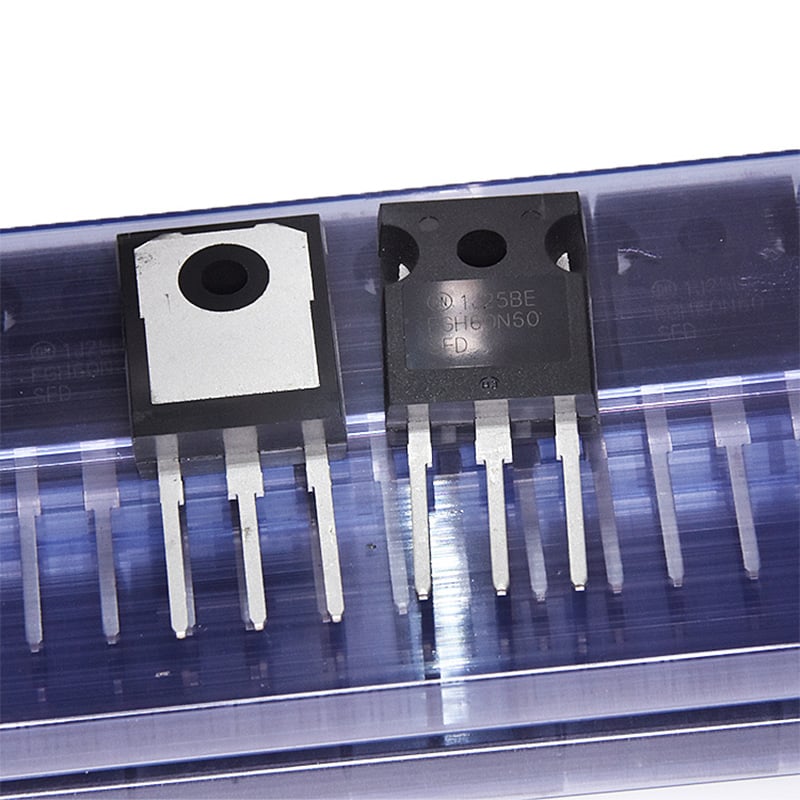
The optimal application of power transistors depends on specific operational parameters including switching frequency requirements, voltage and current handling capabilities, thermal management constraints, and efficiency targets. Industries ranging from automotive manufacturing to telecommunications infrastructure rely on carefully matched power transistor solutions to achieve desired performance benchmarks. This comprehensive examination explores the primary applications where power transistors deliver optimal results, detailing the technical requirements, operational benefits, and selection criteria that distinguish successful implementations from suboptimal deployments.
Variable frequency drives represent one of the most demanding applications for power transistors, requiring devices capable of handling high-power switching operations at frequencies ranging from several hundred hertz to tens of kilohertz. Industrial motors consuming kilowatts to megawatts of power depend on precise control of voltage and current delivered through power transistor-based inverter circuits. These semiconductor devices must withstand repetitive switching cycles while maintaining low conduction losses and managing substantial thermal loads generated during operation.
Manufacturing facilities utilize power transistors in motor control applications to regulate conveyor systems, pumps, compressors, and robotic actuators with exceptional precision. The ability to modulate motor speed continuously rather than relying on mechanical control methods delivers significant energy savings, typically reducing power consumption by twenty to forty percent compared to fixed-speed operation. Power transistors enable this efficiency through rapid switching that synthesizes variable-frequency AC waveforms from DC bus voltages, creating smooth motor control across the entire operating range.
The selection of appropriate power transistors for motor drive applications requires careful consideration of voltage blocking capability, current rating, switching speed characteristics, and safe operating area specifications. IGBT power transistors have become dominant in medium to high-power motor control systems due to their favorable balance of switching performance and conduction efficiency. These devices must reliably handle surge currents during motor starting sequences and maintain stable operation under varying load conditions throughout extended duty cycles.
Precision manufacturing equipment, CNC machinery, and automated assembly systems demand servo motors controlled by high-performance power transistors capable of delivering rapid response times and exceptional position accuracy. These applications require power semiconductor devices that can execute switching transitions in microseconds while maintaining low electromagnetic interference levels that might compromise position feedback sensors or adjacent control circuitry. The power transistors employed in servo drives must support pulse-width modulation frequencies typically exceeding ten kilohertz to achieve smooth torque delivery and minimize audible noise.
Advanced servo applications in semiconductor manufacturing, medical device production, and aerospace component fabrication utilize power transistors rated for continuous operation under demanding thermal conditions. The semiconductor devices must demonstrate consistent performance characteristics across temperature ranges spanning from ambient to junction temperatures approaching maximum ratings. This thermal stability ensures position repeatability remains within tolerance specifications even as power dissipation varies with changing load profiles throughout production cycles.
Solar energy systems depend fundamentally on power transistors within inverter circuits that convert DC electricity generated by photovoltaic panels into grid-compatible AC power. These applications require semiconductor devices optimized for high efficiency across varying irradiance conditions, as even marginal losses in power conversion directly reduce system energy yield and financial returns. Commercial and utility-scale solar installations utilize power transistors rated for continuous operation in harsh environmental conditions including elevated ambient temperatures, humidity exposure, and extended operational lifetimes exceeding twenty years.
Modern solar inverters employ advanced power transistor topologies including three-level and multi-level configurations that minimize switching losses while maintaining low harmonic distortion in grid-injected current waveforms. Silicon carbide and gallium nitride power transistors have gained adoption in premium solar applications due to superior switching characteristics that enable higher operating frequencies and reduced passive component requirements. These wide-bandgap semiconductor devices deliver conversion efficiencies exceeding ninety-eight percent, maximizing energy harvest from solar arrays while minimizing thermal management system complexity and cost.
Wind energy generation systems require robust power transistors capable of processing megawatts of electrical power while withstanding mechanical vibration, temperature cycling, and grid disturbances inherent to utility-scale renewable installations. The power electronic converters in wind turbines utilize semiconductor devices rated for blocking voltages ranging from several hundred to several thousand volts, with current handling capabilities extending into hundreds of amperes per device. These power transistors must maintain reliable operation throughout millions of switching cycles as wind conditions fluctuate continuously.
Generator-side converters and grid-side inverters in wind turbines employ power transistors configured in parallel arrangements to distribute thermal stress and enhance overall system reliability. The semiconductor devices must support fault-ride-through capabilities, enabling continued operation during temporary grid voltage sags without triggering protective shutdowns that reduce energy production. Advanced power transistor packages designed specifically for wind energy applications incorporate enhanced thermal interfaces, strengthened solder connections, and moisture-resistant encapsulation materials that address the unique reliability challenges of tower-mounted power electronics operating in exposed environmental conditions.
Electric and hybrid vehicles represent rapidly expanding applications for high-performance power transistors, with traction inverters serving as critical components that control motor torque and regenerative braking functions. Automotive power transistors must satisfy stringent requirements for compact packaging, lightweight construction, and operation across extreme temperature ranges from subzero cold starts to elevated underhood conditions. The semiconductor devices employed in electric vehicle powertrains typically handle voltages between four hundred and eight hundred volts while switching currents exceeding several hundred amperes during peak acceleration and charging events.
Silicon carbide power transistors have emerged as preferred solutions for next-generation electric vehicles due to superior efficiency characteristics that directly extend driving range per battery charge. These advanced semiconductor devices enable switching frequencies approaching one hundred kilohertz, reducing electromagnetic filter requirements while improving motor control bandwidth for enhanced vehicle dynamics. The lower conduction and switching losses of silicon carbide power transistors translate into reduced cooling system demands, enabling more compact and lighter inverter assemblies that improve overall vehicle packaging efficiency.
Electric vehicles incorporate sophisticated onboard chargers that convert AC grid power into regulated DC current for battery charging, utilizing power transistors in active power factor correction and isolated DC-DC converter stages. These applications demand semiconductor devices capable of maintaining high conversion efficiency across the full charging power range, from low-power overnight charging to rapid charging scenarios approaching eleven kilowatts for residential single-phase installations. The power transistors must withstand repetitive thermal cycling associated with intermittent charging sessions while maintaining reliable operation throughout vehicle lifetimes exceeding fifteen years.
Advanced onboard charging systems employ bidirectional power transistor configurations enabling vehicle-to-grid and vehicle-to-home power transfer capabilities, expanding the functional requirements beyond simple battery charging. These applications require power transistors with low reverse recovery characteristics and stable switching behavior under both forward and reverse current flow conditions. The semiconductor devices must also support wide input voltage ranges accommodating regional grid voltage variations and different charging infrastructure standards implemented globally.
Wireless telecommunications networks rely extensively on power transistors configured as radio frequency amplifiers within cellular base stations, where these semiconductor devices generate the high-power signals transmitted to mobile devices across coverage areas. RF power transistors operating at frequencies from several hundred megahertz to multiple gigahertz must deliver linear amplification characteristics while maintaining high power-added efficiency to minimize operating costs associated with electrical consumption and cooling requirements. Modern base stations employ advanced power transistor technologies including laterally-diffused metal-oxide-semiconductor and gallium nitride devices optimized for specific frequency bands and modulation schemes.
The evolution toward 5G telecommunications infrastructure has intensified demands on power transistors, requiring semiconductor devices capable of supporting wider signal bandwidths, higher frequencies, and massive MIMO antenna configurations. These applications necessitate power transistors with exceptional linearity performance to minimize signal distortion while transmitting complex modulation formats carrying high data rates. Thermal management becomes particularly critical in dense antenna array deployments where multiple power transistors operate in close proximity, demanding devices with low thermal resistance and robust performance characteristics across elevated junction temperatures.
Large-scale data centers require sophisticated power distribution architectures utilizing power transistors in high-current DC-DC converters that supply processing, memory, and storage systems with precisely regulated voltages. These applications demand semiconductor devices capable of handling hundreds of amperes while maintaining conversion efficiencies exceeding ninety-five percent to minimize energy waste and cooling infrastructure requirements. Server power supplies employ power transistors in synchronous rectifier configurations and resonant converter topologies that optimize efficiency across varying computational loads.
The migration toward higher computing densities and artificial intelligence workloads has increased power delivery requirements within data centers, driving adoption of power transistors with lower on-resistance characteristics and faster switching capabilities. Advanced packaging technologies including copper-clip bonding and embedded die approaches reduce parasitic inductance and thermal resistance, enabling power transistors to operate at higher current densities while maintaining acceptable junction temperatures. These semiconductor devices must demonstrate consistent performance throughout continuous operation under elevated ambient temperatures characteristic of data center environments.
Industrial welding equipment, plasma cutting systems, and induction heating applications represent demanding uses for power transistors, where these semiconductor devices must control high-current arcs and electromagnetic fields with precise timing and energy delivery. Welding inverters utilize power transistors to generate high-frequency AC or pulsed DC outputs that provide superior arc stability and weld quality compared to traditional transformer-based systems. The power transistors in these applications must withstand substantial current surges during arc initiation and maintain reliable operation despite harsh industrial environments including electromagnetic noise, temperature extremes, and mechanical vibration.
Plasma processing systems employed in semiconductor manufacturing and surface treatment operations require power transistors capable of generating and controlling radio frequency electromagnetic fields at powers ranging from kilowatts to hundreds of kilowatts. These specialized applications demand semiconductor devices with exceptional voltage blocking capabilities, low output capacitance, and stable high-frequency operation characteristics. The power transistors must reliably handle load variations associated with plasma impedance changes during processing cycles while maintaining consistent power delivery for uniform treatment results.
Advanced medical equipment including MRI scanners, X-ray generators, and therapeutic radiation systems incorporate power transistors in gradient amplifiers, high-voltage modulators, and RF transmitter circuits. These critical healthcare applications require semiconductor devices meeting stringent reliability standards and regulatory compliance requirements while delivering precise control over electromagnetic field generation or radiation dose delivery. Medical power transistors must operate consistently across thousands of patient procedures without degradation in performance characteristics that could compromise diagnostic image quality or treatment accuracy.
Therapeutic ultrasound systems and electrosurgical generators utilize power transistors to generate precisely controlled waveforms for tissue ablation, coagulation, and targeted drug delivery applications. These medical devices demand semiconductor components with exceptional reliability profiles and failure rate specifications significantly more stringent than general industrial applications. The power transistors must maintain stable operation across varying tissue impedances while incorporating protective features that ensure patient safety under all operating conditions including component failures or abnormal load scenarios.
Motor control applications typically require power transistors with voltage ratings exceeding the peak DC bus voltage by a safety margin of at least thirty percent to accommodate transient overvoltages from switching events and grid disturbances. For industrial three-phase systems operating at 480VAC, power transistors rated for 1200 volts provide adequate margin, while current ratings should exceed the motor full-load current by twenty to fifty percent depending on overload requirements and parallel device configurations. The specific ratings depend on motor power level, duty cycle characteristics, and ambient temperature conditions within the installation environment.
Solar inverter applications prioritize maximum efficiency across wide power ranges and extended operational lifetimes, favoring power transistors with ultra-low switching and conduction losses even at premium cost points. Motor drive applications emphasize rugged switching performance, short-circuit withstand capability, and cost-effectiveness for higher-volume industrial deployments. Solar inverters typically operate at fixed locations with controlled thermal environments enabling optimization for steady-state efficiency, while motor drives must accommodate dynamic load variations, frequent starting sequences, and potentially harsh industrial conditions with temperature cycling and contamination exposure.
While power transistors share fundamental operating principles, direct interchangeability across applications is generally not recommended due to application-specific optimization of electrical characteristics, thermal performance, and packaging configurations. Devices optimized for high-frequency switching in telecommunications applications may lack the surge current capability required for motor starting, while power transistors designed for line-frequency rectification would demonstrate excessive switching losses in modern high-frequency converter applications. Successful power transistor selection requires matching device characteristics including switching speed, safe operating area, thermal impedance, and gate drive requirements to specific application demands for optimal reliability and performance.
The selection between silicon and wide-bandgap power transistors depends primarily on application efficiency requirements, switching frequency targets, thermal constraints, and budget considerations. Wide-bandgap devices including silicon carbide and gallium nitride power transistors justify premium pricing in applications where superior efficiency directly generates operational savings, enables compact designs through reduced cooling requirements, or supports higher switching frequencies that minimize passive component size and weight. Silicon power transistors remain cost-effective choices for applications with moderate efficiency requirements, lower switching frequencies, or established thermal management infrastructure capable of handling higher device losses. System-level analysis comparing total ownership costs including energy consumption, cooling infrastructure, and component expenses determines the optimal technology selection for each specific application.