
The Internet of Things ecosystem demands processing units capable of handling complex computational tasks while maintaining energy efficiency and compact form factors. As IoT devices evolve from simple sensor nodes to sophisticated edge computing platforms, the choice of microcontroller architecture becomes a critical design decision that directly impacts device performance, power consumption, and overall system capability. Among the available options, 32-bit microcontrollers have emerged as the preferred solution for modern IoT applications requiring advanced processing power, extensive peripheral integration, and sophisticated software execution environments.
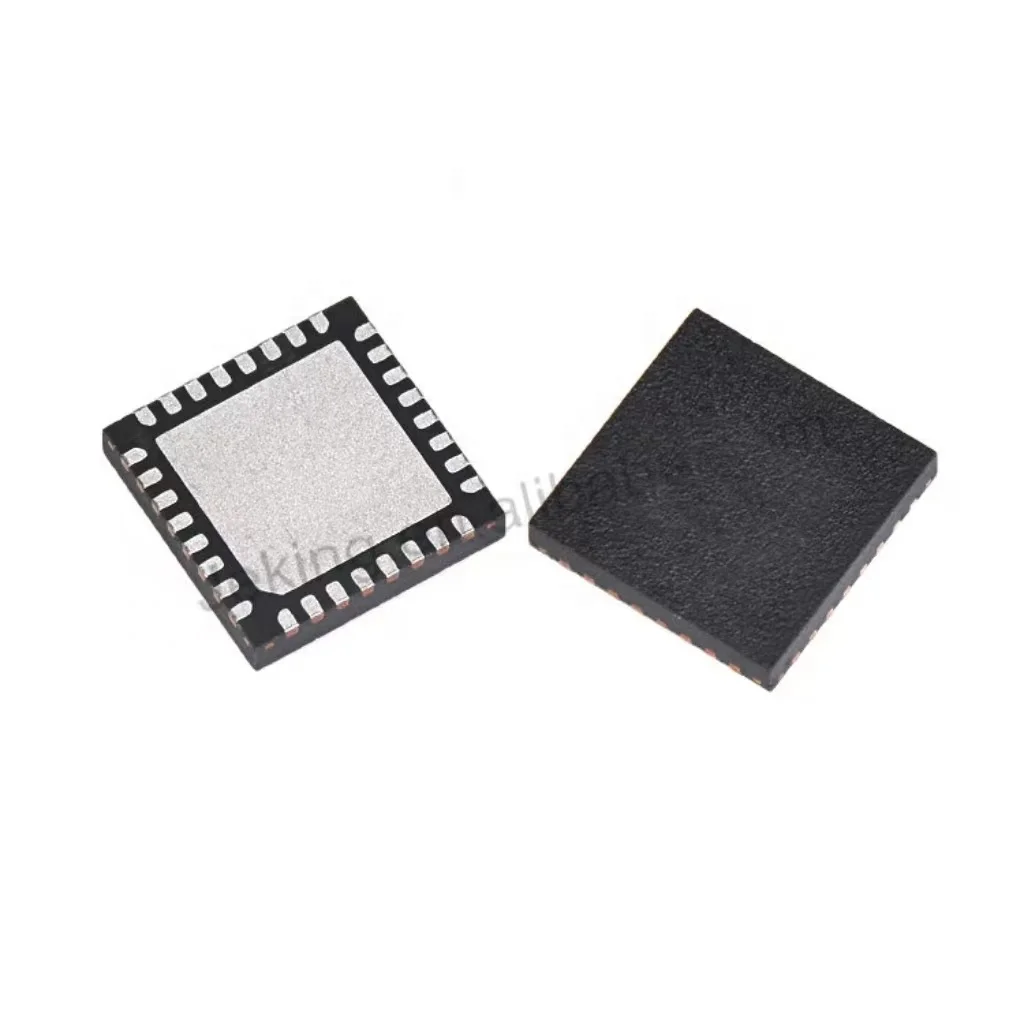
The transition from 8-bit and 16-bit architectures to 32-bit microcontrollers represents a fundamental shift in what IoT devices can accomplish at the edge of networks. This architectural advancement enables developers to implement features previously reserved for more powerful computing platforms, including real-time data processing, machine learning inference, advanced encryption protocols, and multi-tasking operating systems. Understanding the specific advantages that 32-bit microcontrollers bring to IoT implementations helps engineers make informed decisions during the design phase and allows product managers to better align hardware capabilities with application requirements.
The fundamental advantage of 32-bit microcontrollers lies in their ability to process data in larger chunks compared to their 8-bit and 16-bit counterparts. By handling 32 bits of data per clock cycle, these microcontrollers achieve significantly higher computational throughput, which translates directly into faster execution of complex algorithms essential for modern IoT applications. This processing capability becomes particularly valuable when IoT devices must perform local analytics, sensor fusion, or preliminary data filtering before transmitting information to cloud platforms.
In practical IoT deployments, this enhanced processing speed enables devices to respond to environmental changes with minimal latency. Smart sensors equipped with 32-bit microcontrollers can execute sophisticated signal processing algorithms to distinguish between meaningful events and background noise, reducing false alerts and improving system reliability. Industrial IoT applications benefit especially from this capability, as machine condition monitoring systems can analyze vibration patterns or thermal signatures in real-time without relying on constant cloud connectivity.
The higher clock speeds typically available in 32-bit microcontrollers, often ranging from 48 MHz to over 200 MHz, provide additional computational headroom for handling multiple simultaneous tasks. This performance margin proves essential when IoT devices must manage concurrent operations such as sensor data acquisition, wireless communication protocol handling, user interface updates, and data encryption. The ability to execute these tasks without creating bottlenecks ensures smooth operation and responsive system behavior.
Many 32-bit microcontrollers include dedicated hardware for floating-point arithmetic, a feature rarely found in smaller architectures. This hardware acceleration dramatically improves the efficiency of calculations involving decimal numbers, which are ubiquitous in IoT sensor applications measuring temperature, pressure, humidity, acceleration, and countless other physical parameters. Without floating-point hardware support, these calculations must be performed through software emulation, consuming significantly more clock cycles and energy.
The presence of hardware floating-point units enables IoT devices to implement more sophisticated algorithms that would be impractical on simpler architectures. Sensor fusion algorithms that combine data from accelerometers, gyroscopes, and magnetometers to determine device orientation rely heavily on trigonometric and matrix operations that execute far more efficiently with floating-point support. Similarly, signal processing techniques such as Fast Fourier Transforms, which are increasingly deployed in edge devices for audio analysis or predictive maintenance applications, benefit enormously from the computational capabilities of 32-bit microcontrollers.
Beyond standard arithmetic, 32-bit microcontrollers often incorporate specialized digital signal processing instructions that accelerate common operations used in IoT data processing pipelines. These instructions enable efficient implementation of filters, correlation functions, and statistical calculations directly on the microcontroller, reducing the need to transmit raw data for processing elsewhere. This local processing capability not only improves response times but also reduces bandwidth consumption and associated energy costs of wireless transmission.
The 32-bit architecture provides a dramatically expanded memory address space compared to 8-bit and 16-bit systems, theoretically allowing direct access to up to 4 gigabytes of memory. While IoT devices rarely require this full capacity, the larger address space eliminates the memory segmentation schemes and bank-switching techniques that complicate software development on smaller architectures. This simplified memory model makes it feasible to implement more complex software architectures, including real-time operating systems and sophisticated application frameworks.
Modern IoT applications increasingly require substantial code space to accommodate wireless protocol stacks, security libraries, device management frameworks, and application logic. The 32-bit microcontrollers typically offer flash memory ranging from 128 KB to several megabytes, providing ample space for these components without the constraints that limit functionality on smaller devices. This expanded code space enables developers to implement comprehensive feature sets without constantly optimizing for memory constraints.
The availability of larger RAM capacity in 32-bit microcontrollers, often ranging from 16 KB to several hundred kilobytes, enables more sophisticated data buffering and processing strategies. IoT devices can maintain larger communication buffers to handle burst transmissions more efficiently, store more extensive sensor history for local trend analysis, and implement more complex state machines for device behavior management. This memory headroom proves particularly valuable when devices must handle over-the-air firmware updates, which require sufficient RAM to receive and validate new firmware images before installation.
Many 32-bit microcontrollers include interfaces for external memory expansion, such as QSPI for serial flash or SDRAM controllers for dynamic RAM. These interfaces allow IoT device designers to extend storage capacity when applications require data logging, local caching, or storage of large lookup tables and calibration data. The ability to add external memory without consuming excessive microcontroller pins provides flexibility in tailoring memory configurations to specific application requirements.
External memory support becomes particularly valuable in IoT applications involving multimedia content, such as smart displays, voice-enabled interfaces, or devices that store firmware for multiple connected peripherals. The memory bandwidth available through modern external memory interfaces ensures that this expanded storage does not become a performance bottleneck, maintaining the responsiveness expected in contemporary IoT devices.
Modern 32-bit microcontrollers integrate a diverse array of communication peripherals essential for IoT connectivity, including multiple UART, SPI, and I2C interfaces that enable connections to various sensors, actuators, and communication modules. This peripheral richness eliminates the need for external interface expanders or protocol translators, simplifying hardware design and reducing component count. The availability of multiple independent communication channels allows IoT devices to simultaneously manage different subsystems without resource conflicts.
Advanced communication features available in 32-bit microcontrollers include hardware support for protocols such as CAN bus for industrial environments, USB for device configuration and debugging, and Ethernet MAC for wired network connectivity. Many devices targeting IoT applications integrate wireless communication peripherals directly on-chip, including Bluetooth Low Energy radios, Wi-Fi interfaces, or sub-GHz transceivers for long-range communication. This integration reduces external component requirements and simplifies the certification process for wireless devices.
The sophisticated DMA controllers found in 32-bit microcontrollers enable efficient data transfer between communication peripherals and memory without CPU intervention. This capability allows the processor core to remain in low-power sleep modes while data transfers continue, significantly reducing energy consumption in battery-powered IoT devices. DMA also ensures that high-speed communication interfaces can operate at their full bandwidth without overwhelming the processor with interrupt handling overhead.
The timer subsystems in 32-bit microcontrollers offer sophisticated capabilities that extend far beyond simple timing functions. High-resolution timers with 32-bit counters provide precise timing measurements essential for applications such as ultrasonic distance measurement, frequency analysis, or precise event timestamping. Multiple independent timer channels enable IoT devices to manage complex timing relationships between different system components without software coordination overhead.
Advanced PWM generation capabilities support applications requiring precise motor control, LED dimming, or power management. The ability to generate multiple synchronized PWM signals with programmable dead-time insertion enables efficient control of power electronics in IoT applications such as smart lighting, HVAC systems, or battery chargers. Hardware capture and compare functions allow accurate measurement of input signal characteristics, supporting applications like rotary encoder reading or frequency measurement without continuous processor attention.
Security represents a critical concern in IoT deployments, and 32-bit microcontrollers address this need through integrated hardware cryptographic engines that accelerate encryption, decryption, and authentication operations. These hardware accelerators implement standard algorithms such as AES, SHA, and RSA far more efficiently than software implementations, enabling secure communication without excessive energy consumption or processing delays. The ability to perform cryptographic operations in hardware allows even battery-powered IoT devices to maintain strong security throughout their operational lifetime.
Modern 32-bit microcontrollers often include secure boot mechanisms that verify firmware authenticity before execution, protecting against unauthorized firmware modifications. This capability ensures that IoT devices boot only trusted code, preventing malware installation and maintaining device integrity throughout the product lifecycle. Secure storage areas within the microcontroller protect sensitive data such as encryption keys, authentication credentials, and device-specific calibration information from unauthorized access.
The availability of hardware random number generators in 32-bit microcontrollers provides the entropy necessary for generating cryptographic keys, initialization vectors, and nonces required by secure communication protocols. True random number generation proves difficult to implement reliably in software and represents a potential security vulnerability when implemented poorly. Hardware support for this function eliminates this risk and ensures that security implementations meet industry standards.
Advanced 32-bit microcontrollers incorporate memory protection units that enforce access restrictions on different memory regions, preventing unauthorized code execution or data modification. This capability enables implementation of privilege separation between trusted security code and general application code, containing potential vulnerabilities and limiting the damage possible from software exploits. Memory protection becomes particularly valuable in IoT devices running complex software stacks where different code components should operate with different privilege levels.
Secure debug interfaces in 32-bit microcontrollers allow manufacturers to implement controlled access to debugging features, preventing unauthorized parties from extracting firmware or analyzing device operation while still enabling legitimate debugging during development and field troubleshooting. This balance between security and serviceability represents an important consideration in IoT product design, and the sophisticated access control mechanisms available in 32-bit microcontrollers provide the flexibility to implement appropriate policies.
The processing power and memory capacity of 32-bit microcontrollers make them ideal platforms for real-time operating systems, which greatly simplify development of complex IoT applications. RTOS platforms provide task scheduling, inter-task communication, resource management, and synchronization primitives that eliminate the need for developers to implement these functions manually. Popular RTOS options such as FreeRTOS, Zephyr, and various commercial alternatives offer extensive middleware libraries specifically designed for IoT applications.
Operating system support enables modular software architectures where different functional components operate as independent tasks with well-defined interfaces. This modularity improves code maintainability, simplifies testing, and enables teams to work on different aspects of the system concurrently. The ability to assign priorities to different tasks ensures that time-critical operations receive processor attention when needed, while background tasks execute during idle periods without interfering with system responsiveness.
Many 32-bit microcontrollers support memory protection features that RTOS platforms can leverage to isolate tasks from one another, improving system robustness and security. Task isolation prevents programming errors in one component from corrupting the operation of other components, a particularly valuable capability in safety-critical IoT applications such as medical devices or industrial control systems.
The widespread adoption of 32-bit microcontrollers in IoT applications has fostered a mature ecosystem of development tools, including sophisticated integrated development environments, debugging tools, and code analysis utilities. Professional-grade tools support complex debugging scenarios involving multiple concurrent tasks, wireless communication analysis, and power consumption profiling. This tooling ecosystem dramatically reduces development time and improves code quality compared to the more limited tool support available for simpler architectures.
Extensive middleware libraries accelerate IoT application development by providing pre-built implementations of communication protocols, data processing algorithms, and device management functions. These libraries undergo rigorous testing and optimization, offering reliability and performance that would require substantial effort to replicate in custom implementations. The availability of certified protocol stacks for standards such as Thread, Zigbee, Bluetooth Mesh, or LTE-M enables rapid development of standards-compliant IoT devices.
High-level programming language support, including C++, Python, and JavaScript interpreters, becomes practical on 32-bit microcontrollers due to their processing power and memory capacity. These languages improve developer productivity and code maintainability compared to pure C implementations, though they typically involve some performance trade-offs. The ability to choose appropriate programming languages for different components within an IoT device provides flexibility in balancing development efficiency against runtime performance.
While 32-bit microcontrollers typically consume more power during active operation due to their higher performance capabilities, modern devices incorporate sophisticated power management features that enable overall energy efficiency competitive with simpler architectures. The key advantage lies in their ability to complete computational tasks more quickly and then enter deep sleep modes, potentially consuming less total energy per operation. Advanced sleep modes in 32-bit microcontrollers can reduce current consumption to microampere levels while maintaining RAM contents and enabling rapid wake-up. The efficiency of hardware accelerators for cryptography, floating-point math, and communication protocols often results in lower energy consumption for complex tasks compared to software implementations on simpler processors. The optimal choice depends on specific application requirements, with 32-bit microcontrollers excelling in scenarios requiring periodic bursts of computation rather than continuous simple monitoring.
Not all IoT applications require the capabilities of 32-bit microcontrollers, and simpler 8-bit or 16-bit architectures remain appropriate for basic sensor nodes with minimal processing requirements and tight cost constraints. Applications involving simple periodic measurements, basic threshold monitoring, or straightforward data relay to a gateway function perfectly well on simpler microcontrollers. However, as IoT devices increasingly incorporate local intelligence, security features, and sophisticated communication protocols, the advantages of 32-bit microcontrollers become compelling. The trend toward edge computing, where processing moves closer to data sources to reduce latency and bandwidth consumption, strongly favors more capable processors. Additionally, as production volumes increase and semiconductor processes mature, the cost differential between architecture classes continues to narrow, making 32-bit microcontrollers economically viable for a broader range of applications.
The C programming language remains the most common choice for 32-bit microcontroller development, offering a balance of hardware control, performance, and portability across different device families. C++ has gained popularity for its object-oriented features that improve code organization in complex projects while maintaining efficiency when used judiciously. Modern development increasingly leverages frameworks built atop real-time operating systems, such as ARM Mbed OS or Zephyr, which provide hardware abstraction layers and extensive middleware libraries that accelerate development. For rapid prototyping and applications where absolute performance is less critical, high-level environments like MicroPython or JavaScript interpreters enable faster development cycles. The choice depends on project requirements, team expertise, performance constraints, and the need for hardware-level control versus development speed.
Hardware cryptographic acceleration provides multiple security advantages beyond just performance improvements. Dedicated cryptographic engines execute standard algorithms with constant-time behavior regardless of data content, eliminating timing side-channels that attackers might exploit in software implementations. Hardware modules often incorporate countermeasures against physical attacks such as power analysis or electromagnetic monitoring, protecting sensitive key material during cryptographic operations. The performance benefits enable more frequent security operations without draining batteries, allowing devices to re-authenticate more often or use stronger encryption with larger key sizes. Secure key storage within cryptographic hardware prevents extraction through software vulnerabilities or debugging interfaces. These factors combine to significantly strengthen IoT device security posture, making hardware cryptographic features increasingly essential rather than optional in security-conscious deployments. The efficiency gains also enable security features in battery-powered devices that might otherwise disable encryption to preserve energy.