
Low-noise linear amplifiers represent a cornerstone technology in modern electronics, delivering exceptional signal integrity across countless applications. These specialized amplification devices maintain signal clarity while minimizing unwanted noise, making them indispensable for high-fidelity audio systems, precision instrumentation, and sensitive communication equipment. Understanding their advantages helps engineers and designers make informed decisions when selecting amplification solutions for critical applications.
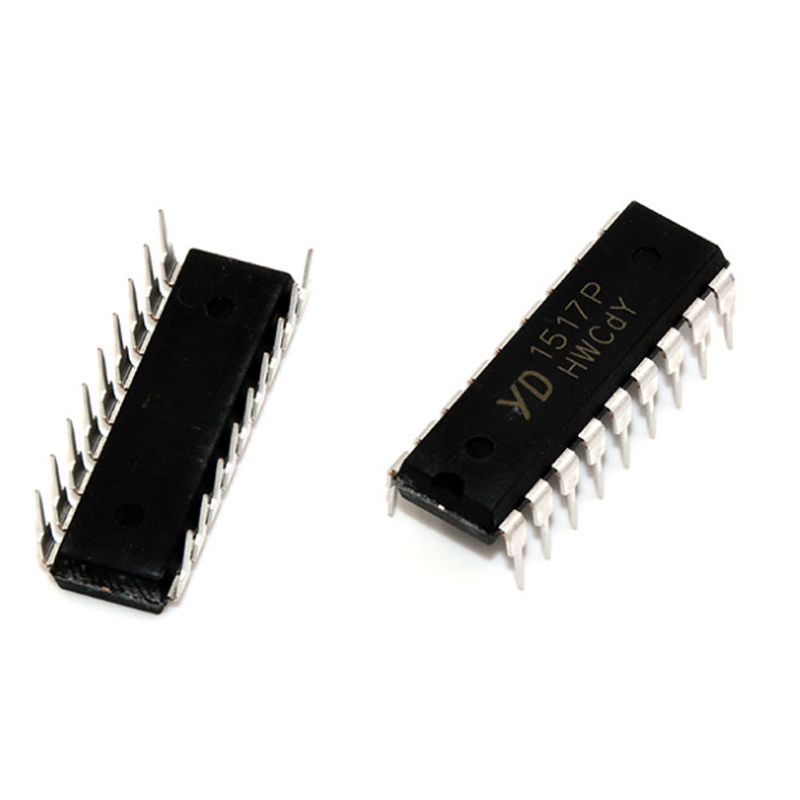
The primary advantage of low-noise linear amplifiers lies in their exceptional ability to preserve signal integrity throughout the amplification process. Unlike their switching counterparts, linear amplifiers operate in their active region continuously, ensuring that the output signal maintains a faithful representation of the input. This characteristic proves crucial in applications where signal accuracy directly impacts performance, such as medical monitoring equipment, scientific instrumentation, and high-end audio reproduction systems.
Linear amplifiers achieve this superior performance through carefully designed circuit topologies that minimize harmonic distortion and intermodulation products. The amplification process occurs smoothly without the abrupt switching transitions that can introduce unwanted spectral components. This smooth operation results in cleaner output signals that preserve the original waveform characteristics across the entire frequency spectrum.
Dynamic range represents the ratio between the largest and smallest signals that an amplifier can handle effectively. Low-noise linear amplifiers excel in this area by providing wide dynamic range capabilities that accommodate both weak and strong input signals without compromising performance. This flexibility makes them ideal for applications where signal levels vary significantly over time or across different operating conditions.
The wide dynamic range capability stems from the linear operating characteristics that allow these amplifiers to handle large signal swings while maintaining low noise floors. This combination enables precise amplification of small signals in the presence of larger ones, a critical requirement in many professional audio, RF communication, and sensor applications where signal-to-noise ratio directly affects system performance.
Low-noise linear amplifiers distinguish themselves through their remarkably low noise contributions to the overall system performance. The noise floor of these amplifiers typically measures several decibels below conventional amplification solutions, enabling the detection and processing of extremely weak signals that would otherwise be lost in the noise. This capability proves essential in applications such as radio astronomy, seismic monitoring, and precision measurement systems where signal sensitivity determines operational effectiveness.
The low noise performance results from careful component selection, optimized circuit design, and advanced manufacturing techniques. Key factors include the use of low-noise transistors, appropriate biasing schemes, and minimal feedback networks that preserve the inherent noise characteristics of the active devices. These design considerations work together to create amplifiers with noise figures that approach the theoretical limits of the semiconductor technology employed.
Temperature variations, supply voltage fluctuations, and aging effects can significantly impact amplifier noise performance in conventional designs. Low-noise linear amplifiers incorporate advanced compensation techniques and stable operating points that maintain consistent noise characteristics across wide operating ranges. This stability ensures reliable performance in challenging environments where temperature extremes or power supply variations might otherwise compromise system operation.
The stable noise performance extends to frequency domain characteristics as well, with many low-noise linear amplifiers maintaining flat noise spectral density across their operational bandwidth. This frequency-independent noise behavior simplifies system design and ensures predictable performance across the entire signal spectrum of interest.
Low-noise linear amplifiers demonstrate remarkable versatility across multiple application domains, from DC precision measurements to high-frequency RF communications. Their linear operating characteristics make them suitable for both analog and mixed-signal processing applications where signal fidelity cannot be compromised. This versatility reduces design complexity and component count in systems that require amplification across diverse signal types and frequency ranges.
The broad application compatibility stems from the fundamental design principles that prioritize linearity and noise performance over efficiency considerations. While this approach may result in higher power consumption compared to switching alternatives, the benefits in terms of signal quality and application flexibility often justify the trade-off in demanding applications.
Modern low-noise linear amplifiers offer scalable performance characteristics that can be optimized for specific application requirements. Designers can select from various gain configurations, bandwidth options, and power consumption levels to match the exact needs of their particular application. This scalability allows for cost-effective solutions that provide optimal performance without over-engineering or unnecessary complexity.
The scalable nature extends to integration capabilities as well, with many low-noise linear amplifiers available in compact packages suitable for high-density applications or as part of larger integrated solutions. This flexibility supports both discrete implementations for maximum performance and integrated approaches for space-constrained applications.
The linear operating characteristics of these amplifiers significantly simplify circuit design compared to switching alternatives that require complex filtering and control circuits. Linear amplifiers typically require minimal external components, straightforward power supply requirements, and simple biasing networks. This simplicity reduces design time, component count, and potential failure points while improving overall system reliability.
The design simplicity also translates to easier testing and troubleshooting procedures. Linear amplifiers provide predictable behavior that can be easily measured and verified using standard test equipment. This predictability accelerates development cycles and reduces the complexity of quality assurance procedures during manufacturing.
Low-noise linear amplifiers typically exhibit excellent thermal stability characteristics that maintain consistent performance across wide temperature ranges. The linear operating regions of these amplifiers are inherently more stable than switching operations that can be sensitive to temperature-induced timing variations or threshold shifts. This stability proves crucial in applications where ambient temperature varies significantly or where self-heating effects might impact performance.
Advanced thermal compensation techniques further enhance the temperature stability of modern low-noise linear amplifiers. These techniques may include temperature-compensated biasing networks, matched component layouts, and thermal tracking arrangements that automatically adjust operating parameters to maintain optimal performance across temperature variations.
The continuous linear operation of these amplifiers typically results in excellent long-term reliability compared to switching designs that experience repetitive stress from rapid state transitions. Linear amplifiers operate at stable bias points without the switching transients that can contribute to component aging and eventual failure. This reliability advantage translates to lower maintenance costs and extended operational lifetimes in critical applications.
The reliability benefits extend beyond the amplifier itself to the surrounding circuitry. The absence of switching transients reduces stress on associated components such as power supply filters, input coupling networks, and output loads. This system-level reliability improvement can significantly reduce total cost of ownership over the operational lifetime of the equipment.
Low-noise linear amplifiers generate minimal electromagnetic interference compared to switching amplifiers that produce broadband spectral energy due to their rapid state transitions. The smooth, continuous operation of linear amplifiers results in predictable spectral characteristics that simplify EMI compliance and reduce the need for extensive filtering and shielding measures.
This EMI advantage proves particularly valuable in sensitive applications such as medical equipment, precision instrumentation, and communication systems where electromagnetic compatibility requirements are stringent. The reduced EMI footprint allows for more compact system designs and lower overall implementation costs while meeting regulatory compliance requirements more easily.
Low-noise linear amplifiers incorporate specialized design techniques and high-quality components specifically chosen to minimize noise contribution while maintaining linear operation. They feature optimized transistor selection, careful circuit topology design, and advanced biasing schemes that prioritize noise performance over other characteristics like efficiency. These amplifiers typically use low-noise semiconductor devices, precision resistors, and stable reference circuits that contribute minimal additional noise to the signal path.
These amplifiers prove most valuable in applications where signal integrity and noise performance are critical requirements. Key applications include high-fidelity audio systems, precision instrumentation, medical monitoring equipment, scientific measurement devices, radio astronomy receivers, and sensitive communication systems. They excel in situations where weak signals must be amplified without degrading the signal-to-noise ratio or where harmonic distortion must be minimized to preserve signal quality.
Low-noise linear amplifiers typically operate at lower efficiency levels compared to switching amplifiers because they maintain continuous conduction through their active devices rather than switching between on and off states. While this results in higher power consumption and heat generation, the trade-off provides superior signal quality, lower noise, and minimal electromagnetic interference. The efficiency difference becomes less significant in low to moderate power applications where signal quality takes precedence over power consumption considerations.
Key selection criteria include noise figure specifications, gain requirements, bandwidth capabilities, power consumption limits, supply voltage ranges, and package options. Other important considerations include temperature stability, dynamic range, harmonic distortion levels, and input/output impedance characteristics. The specific application requirements will determine which parameters are most critical, with some applications prioritizing ultra-low noise performance while others may emphasize wide bandwidth or high dynamic range capabilities.