
Selecting the appropriate linear regulator for your electronic circuit design is a critical decision that directly impacts system performance, efficiency, and reliability. Linear regulators serve as essential components in power management systems, providing stable voltage output from higher input voltages while maintaining simplicity and low noise characteristics. Understanding the key specifications and application requirements will guide you toward making an informed choice that optimizes your circuit's functionality and meets your project's specific demands.
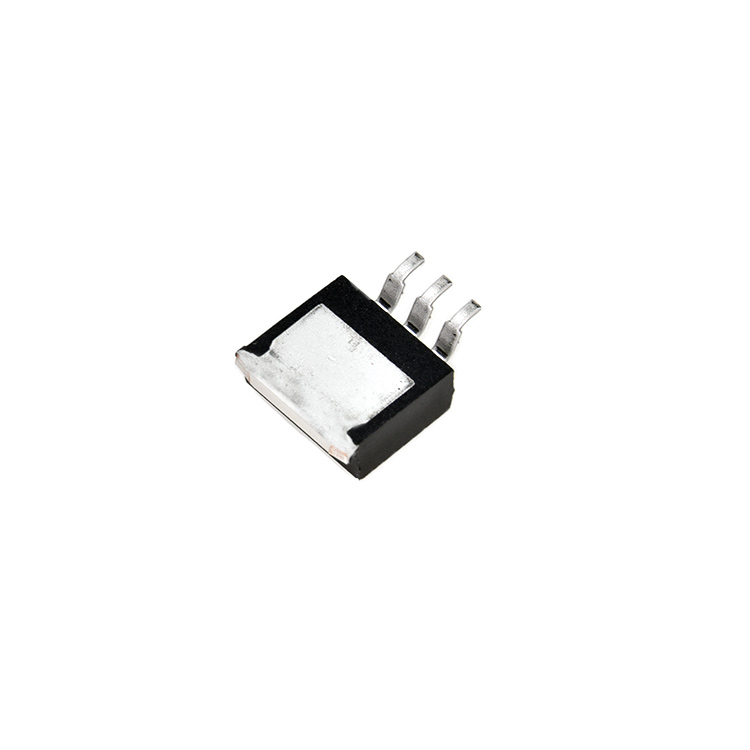
A linear regulator operates by continuously adjusting its internal resistance to maintain a constant output voltage regardless of variations in input voltage or load current. This regulation is achieved through a feedback control system that compares the output voltage to an internal reference and adjusts the pass element accordingly. The simplicity of this approach makes linear regulators highly reliable and generates minimal electromagnetic interference compared to switching regulators.
The linear regulation process inherently dissipates excess energy as heat, which is calculated as the difference between input and output voltage multiplied by the load current. This characteristic makes linear regulators ideal for low-power applications where efficiency is secondary to noise performance and design simplicity. Modern linear regulator designs incorporate sophisticated control circuits that enhance transient response and improve overall stability across varying operating conditions.
Linear regulators are available in several configurations to accommodate different application requirements. Fixed output regulators provide predetermined voltage levels and offer the simplest implementation with minimal external components. Adjustable regulators allow output voltage customization through external resistor networks, providing flexibility for various system requirements while maintaining the inherent benefits of linear regulation.
Low-dropout regulators represent an advanced category that maintains regulation even when the input-output voltage differential is minimal. These devices are particularly valuable in battery-powered applications where maximizing usable battery capacity is essential. Additionally, specialized variants include precision regulators with enhanced accuracy specifications and ultra-low noise devices designed for sensitive analog applications.
Determining the appropriate voltage specifications requires careful analysis of your system's power requirements and operating conditions. The output voltage must match your load requirements precisely, while the input voltage range should accommodate all expected supply variations including ripple and transient conditions. Additionally, consider the dropout voltage specification, which defines the minimum input-output differential required for proper regulation.
Current capacity selection involves analyzing both steady-state and transient load requirements. The linear regulator must provide adequate current capacity with appropriate derating for thermal considerations. Peak current handling capability is equally important for applications with pulsed loads or during system startup conditions when capacitive loads may create temporary current surges.
Line regulation measures how well the output voltage remains constant despite variations in input voltage, while load regulation indicates output stability under changing current demands. These parameters are crucial for maintaining system performance in dynamic operating environments. Modern linear regulators typically achieve excellent regulation specifications, often in the millivolt range for both line and load variations.
Transient response characteristics determine how quickly the regulator recovers from sudden load changes. Fast transient response is essential in digital systems where switching loads can create rapid current variations. The combination of output capacitance and regulator bandwidth determines overall transient performance, requiring careful optimization for specific applications.
Thermal analysis is fundamental to linear regulator selection since these devices dissipate significant power as heat. Power dissipation equals the voltage drop across the regulator multiplied by the load current, making thermal management increasingly important as the input-output differential increases. Accurate thermal calculations prevent component failure and ensure reliable long-term operation.
Junction temperature must remain within specified limits under all operating conditions, requiring consideration of ambient temperature, thermal resistance, and power dissipation. Thermal resistance includes the junction-to-case resistance of the device package plus the case-to-ambient resistance of the mounting system. Proper thermal analysis often reveals the need for heat sinks or improved board thermal design to maintain acceptable operating temperatures.
Package selection significantly impacts thermal performance and overall system integration. Surface-mount packages offer excellent thermal coupling to printed circuit board copper areas, while through-hole packages may provide better heat sink mounting options for high-power applications. Advanced packages incorporate thermal pads or exposed die attach areas that enhance heat transfer capabilities.
Mounting considerations extend beyond electrical connections to include thermal interface materials and heat sink selection. Proper mounting techniques ensure optimal heat transfer while maintaining mechanical reliability. Board layout optimization with thermal vias and copper pours can significantly improve heat dissipation in surface-mount applications where external heat sinks are not practical.
Linear regulators excel in applications requiring low noise and excellent ripple rejection, making them ideal for powering sensitive analog circuits. Output noise specifications typically include both broadband noise and discrete frequency components that could interfere with circuit operation. Ultra-low noise linear regulators are available for the most demanding applications such as precision measurement systems and high-resolution data acquisition.
Power supply rejection ratio measures the regulator's ability to attenuate input voltage variations, preventing upstream switching noise from affecting sensitive loads. This characteristic is particularly important when linear regulators are used as post-regulators following switching power supplies. The frequency response of PSRR determines effectiveness across different noise frequencies, with many applications requiring good rejection at both low and high frequencies.
While linear regulators are inherently less efficient than switching alternatives, careful selection can optimize performance for specific applications. Efficiency equals the output power divided by input power, with the difference dissipated as heat. For battery-powered systems, efficiency directly impacts operating time and thermal management requirements.
Low-dropout regulators maximize efficiency in battery applications by maintaining regulation with minimal voltage overhead. Some advanced linear regulators incorporate shutdown modes that reduce quiescent current to microampere levels, extending battery life in standby conditions. Ground current, which represents the regulator's own power consumption, becomes significant in low-power applications and should be minimized accordingly.
Input and output capacitors are essential for stable linear regulator operation, providing energy storage and filtering capabilities. Input capacitors reduce the impedance seen by the regulator and provide instantaneous current during transient conditions. The capacitor value and type must be selected based on the regulator's requirements and the characteristics of the input power source.
Output capacitors determine transient response and stability characteristics, with both capacitance value and equivalent series resistance affecting performance. Ceramic capacitors offer low ESR but may introduce stability issues in some regulators, while tantalum or aluminum electrolytic capacitors provide higher capacitance with controlled ESR characteristics. Proper placement near the regulator terminals minimizes inductance and optimizes high-frequency performance.
Many modern linear regulators incorporate built-in protection features that enhance system reliability. Thermal shutdown protection prevents device failure under excessive temperature conditions, while current limiting protects against short circuits and overload conditions. These features reduce the need for external protection circuits and improve overall system robustness.
Additional features may include enable/disable control for power sequencing, power-good indicators for system monitoring, and soft-start capabilities to control inrush current. Remote sensing inputs allow precise voltage regulation at the load location, compensating for voltage drops in distribution wiring. These enhanced features often justify the use of more sophisticated linear regulator devices in demanding applications.
Comprehensive testing ensures that the selected linear regulator meets all application requirements under actual operating conditions. Load regulation testing involves measuring output voltage across the full current range, while line regulation testing evaluates performance over the specified input voltage range. These tests verify that the regulator maintains specifications under all anticipated operating conditions.
Transient response testing evaluates the regulator's ability to maintain output voltage during rapid load changes. Step load testing with appropriate rise times reveals overshoot, undershoot, and settling time characteristics. Thermal testing under maximum power dissipation conditions confirms that junction temperatures remain within acceptable limits and that thermal shutdown functions properly when exceeded.
Reliability evaluation extends beyond initial performance verification to include long-term stability and aging characteristics. Accelerated life testing at elevated temperatures and voltages can predict component lifetime under normal operating conditions. Output voltage drift over time and temperature provides insight into long-term accuracy requirements and calibration needs.
Environmental stress testing evaluates regulator performance under conditions such as vibration, shock, and thermal cycling that may be encountered in actual applications. These tests are particularly important for automotive, aerospace, and industrial applications where environmental conditions are severe. Proper qualification testing ensures reliable operation throughout the intended product lifetime.
Linear regulators dissipate excess power as heat through continuous voltage drops, while switching regulators use high-frequency switching to achieve higher efficiency. Linear regulators offer superior noise performance and simpler designs, making them ideal for noise-sensitive applications. Switching regulators provide better efficiency but generate switching noise and require more complex control circuits and filtering components.
Power dissipation in a linear regulator equals the voltage difference between input and output multiplied by the load current, plus the regulator's own quiescent current consumption. For example, if the input voltage is 12V, output voltage is 5V, and load current is 1A, the power dissipation would be approximately 7W plus quiescent power. This heat must be properly managed through appropriate thermal design and heat sinking.
Low-dropout regulators are preferred when the input-output voltage differential is small, particularly in battery-powered applications where maximizing usable battery capacity is important. Standard linear regulators typically require 2-3V dropout, while LDO regulators can operate with dropout voltages as low as 100-300mV. This capability extends battery life and allows regulation closer to the end of battery discharge curves.
Stability depends on several factors including output capacitor characteristics, load impedance, and internal compensation design. Output capacitor ESR and capacitance values must match the regulator's stability requirements, with some devices requiring minimum ESR for stable operation. Load characteristics such as capacitive or dynamic impedance can also affect stability, particularly in regulators with fast transient response specifications.