
Low-noise transistors represent a critical component category in modern electronic systems where signal integrity and precision are paramount. These specialized semiconductor devices are engineered to minimize internal noise generation, enabling accurate amplification and processing of weak signals across applications ranging from audio equipment to scientific instrumentation. Understanding the advantages that low-noise transistors provide helps engineers and designers make informed decisions when developing circuits where noise performance directly impacts system functionality, measurement accuracy, and user experience.
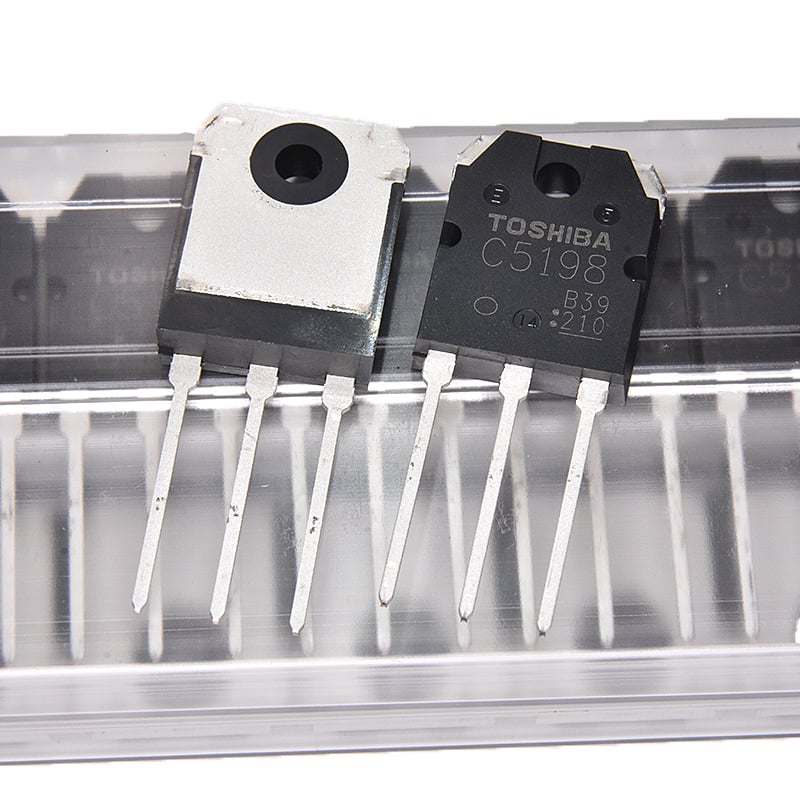
The advantages of low-noise transistors extend beyond simple noise reduction to encompass improved signal-to-noise ratio, enhanced dynamic range, greater measurement sensitivity, and superior performance in high-frequency applications. These benefits translate into tangible improvements in system performance, particularly in telecommunications, medical electronics, scientific research, and high-fidelity audio reproduction. By examining the specific advantages these components offer, designers can better appreciate how low-noise transistors enable applications that would be impossible with standard transistor technology, while also understanding the practical trade-offs involved in their selection and implementation.
The primary advantage of low-noise transistors lies in their ability to dramatically improve signal-to-noise ratio in electronic circuits. These devices achieve this through careful manufacturing processes that reduce inherent noise sources such as flicker noise, shot noise, and thermal noise. When amplifying weak signals—such as those from sensors, antennas, or microphones—low-noise transistors preserve signal integrity by adding minimal additional noise during the amplification process. This characteristic becomes critical in applications where input signals may be in the microvolt range, and any additional noise introduced by the amplification stage would significantly degrade overall system performance.
In measurement and instrumentation systems, low-noise transistors enable detection of signals that would otherwise be buried beneath the noise floor. Scientific instruments such as oscilloscopes, spectrum analyzers, and data acquisition systems rely on these components to achieve resolution specifications that determine their usefulness in research and industrial applications. The reduced noise contribution allows for accurate measurement of smaller signal variations, extending the effective dynamic range of measurement equipment. This advantage becomes particularly valuable in fields like materials science, biomedical research, and precision manufacturing where detecting subtle signal changes provides critical information about physical phenomena or process quality.
Telecommunications and wireless communication systems derive substantial benefits from low-noise transistors, particularly in receiver front-end circuits. The noise figure of the first amplification stage in a receiver chain disproportionately affects overall system noise performance, making the selection of low-noise transistors crucial for receiver sensitivity. By improving SNR at the receiver input, these devices enable detection of weaker signals, extending communication range, improving link reliability, and reducing required transmitter power. In cellular infrastructure, satellite communications, and radio astronomy applications, the advantages of low-noise transistors directly translate to enhanced system capability and operational efficiency.
Low-noise transistors typically exhibit excellent high-frequency performance characteristics that complement their noise advantages. These devices are engineered with structural features such as reduced parasitic capacitances, optimized carrier transit times, and minimized feedback effects that enable operation at frequencies extending into the microwave range. The combination of low noise and high-frequency capability makes these transistors ideal for RF and microwave applications where both characteristics are essential. Applications such as radar receivers, satellite transponders, and wireless base stations require components that maintain low noise figures while operating at gigahertz frequencies, making low-noise transistors the preferred choice for these demanding applications.
The superior frequency response of low-noise transistors enables broader bandwidth operation in amplifier circuits, which directly benefits applications requiring wide dynamic signal processing. In broadband communication systems, wideband instrumentation, and multi-channel receiver architectures, the ability to maintain low noise performance across extended frequency ranges simplifies system design and improves overall performance. This bandwidth advantage allows engineers to design single-stage amplifiers that cover frequency ranges that might otherwise require multiple specialized stages, reducing component count, power consumption, and system complexity while maintaining excellent noise performance throughout the operating bandwidth.
When employed in oscillator circuits, low-noise transistors contribute to reduced phase noise, which is critical for applications requiring frequency stability and spectral purity. Phase noise performance directly affects the quality of synthesized signals in communication systems, timing accuracy in digital circuits, and spectral resolution in analytical instruments. Low-noise transistors achieve better phase noise performance through their reduced internal noise generation and superior linearity characteristics. This advantage proves particularly valuable in precision frequency synthesis applications, radar systems, and test equipment where phase noise specifications determine system capability and measurement accuracy.
Low-noise transistors contribute significantly to extending the dynamic range of electronic systems by lowering the noise floor without sacrificing maximum signal handling capability. Dynamic range—defined as the ratio between the largest and smallest signals a system can process—determines the versatility and performance of measurement instruments, audio equipment, and communication receivers. By reducing the minimum detectable signal level through lower noise contribution, these transistors effectively expand the lower end of the dynamic range. In applications such as digital signal processing front-ends, sensor interfaces, and data acquisition systems, this expanded dynamic range enables simultaneous processing of strong and weak signals without compression or distortion.
Many low-noise transistors exhibit superior linearity compared to standard devices, reducing harmonic distortion and intermodulation products in amplifier circuits. This linearity advantage stems from careful device design that optimizes transconductance uniformity and minimizes nonlinear junction effects. In high-fidelity audio applications, the combination of low noise and excellent linearity produces amplification that faithfully reproduces source material without introducing audible artifacts. Similarly, in RF applications, improved linearity reduces spurious signal generation that could interfere with adjacent channels or violate regulatory emission requirements, making low-noise transistors valuable for meeting stringent performance specifications.
The design characteristics that enable low noise performance often correlate with improved overload recovery behavior in amplifier circuits. Low-noise transistors typically maintain controlled operation when subjected to momentary signal overloads, recovering quickly without producing extended distortion or instability. This characteristic proves valuable in applications where signal levels may vary unpredictably, such as microphone preamplifiers, antenna receivers, and industrial sensor interfaces. The combination of low noise floor and graceful overload handling enables system designs that accommodate wide signal amplitude variations while maintaining performance specifications across operating conditions.
In professional audio equipment and high-fidelity consumer electronics, low-noise transistors enable reproduction quality that approaches theoretical limits imposed by the recording medium itself. Microphone preamplifiers, phono stages, and instrument amplifiers rely on these components to amplify weak acoustic signals without adding audible hiss or noise that would compromise recording or listening quality. The noise performance of low-noise transistors becomes particularly critical at low signal levels, where even small amounts of added noise become perceptible. Professional recording studios, broadcast facilities, and audiophile equipment manufacturers specify low-noise transistors to achieve noise floors below the threshold of human hearing, ensuring that electronic amplification does not become the limiting factor in audio system performance.
Medical diagnostic equipment such as electrocardiographs, electroencephalographs, and ultrasound imaging systems depend on low-noise transistors to detect and amplify the extremely weak biological signals that provide diagnostic information. Bioelectric signals from the human body typically measure in the microvolt range and contain critical diagnostic information across wide frequency ranges. Low-noise transistors in these input stages must amplify these signals while adding minimal noise that could obscure pathological features or reduce diagnostic accuracy. The advantages these components provide directly translate to improved clinical outcomes through earlier disease detection, more accurate diagnosis, and enhanced monitoring capabilities in critical care environments.
Research-grade instrumentation across physics, chemistry, and materials science relies heavily on the advantages provided by low-noise transistors. Spectroscopy equipment, particle detectors, scanning probe microscopes, and cryogenic measurement systems all require amplification stages that preserve the integrity of extremely weak signals generated by physical phenomena under investigation. In many research applications, the signals of interest exist at or near the thermal noise limit, making every additional noise source a potential impediment to discovery. Low-noise transistors enable measurements that push the boundaries of scientific knowledge by allowing researchers to observe phenomena that would be undetectable with conventional amplification technology, advancing fields from quantum physics to neuroscience.
While low-noise transistors provide substantial advantages, engineers must consider practical trade-offs during component selection and circuit design. These specialized devices typically command higher costs than standard transistors, require careful attention to circuit layout and grounding practices, and may exhibit different operating characteristics that necessitate circuit modifications. The selection of appropriate low-noise transistors involves balancing noise figure requirements against other parameters such as gain, bandwidth, power consumption, and voltage ratings. In cost-sensitive applications, designers must evaluate whether the performance advantages justify the premium pricing, or whether careful circuit design with standard components might achieve acceptable results. Understanding these trade-offs ensures optimal component selection that meets performance requirements without unnecessary cost or complexity.
Realizing the full advantages of low-noise transistors requires meticulous attention to circuit board layout, component placement, and environmental noise control. Even the best low-noise transistors cannot overcome poor layout practices that introduce external noise sources, create ground loops, or allow electromagnetic interference to couple into sensitive signal paths. Proper implementation includes careful impedance matching, minimal lead lengths for critical signals, strategic placement of bypass capacitors, and appropriate shielding techniques. Temperature stability also affects noise performance, as thermal variations can modulate device characteristics and introduce additional noise sources. Professional designs often incorporate thermal management strategies to maintain consistent operating temperatures, ensuring that the advantages of low-noise transistors remain stable across environmental conditions encountered in actual deployment.
Validating that low-noise transistors deliver expected performance advantages requires appropriate test equipment and measurement methodologies. Noise figure measurements demand specialized instruments and careful technique to avoid measurement errors that can obscure actual device performance. Engineers must understand the limitations of test equipment, proper termination techniques, and calibration procedures to obtain meaningful results. In production environments, implementing quality control procedures that verify noise performance ensures that the advantages expected from low-noise transistors are consistently delivered in manufactured products. This verification becomes particularly important given the premium cost of these components and the critical role they play in overall system performance.
Low-noise transistors typically achieve noise figures ranging from 0.5 dB to 3 dB at frequencies up to several gigahertz, while standard transistors may exhibit noise figures of 4 dB to 6 dB or higher. The specific noise figure depends on frequency, bias conditions, and source impedance matching. At lower frequencies, specialized low-noise transistors can achieve noise figures below 1 dB, approaching the theoretical minimum set by thermal noise. This performance advantage becomes increasingly significant in applications where the first amplification stage determines overall system noise performance, such as receiver front-ends and sensitive measurement equipment.
Low-noise transistors are primarily optimized for small-signal applications where noise performance takes priority over power handling capability. Most low-noise transistors are designed for signal amplification rather than power amplification, with output power capabilities typically ranging from milliwatts to a few watts. However, some specialized low-noise transistors offer moderate power handling while maintaining good noise characteristics, making them suitable for applications such as low-noise power amplifiers in communication systems. For applications requiring both low noise and high power output, system designs typically employ separate gain stages, using low-noise transistors in the input stage followed by power transistors in subsequent stages.
Temperature significantly influences the noise performance of low-noise transistors through multiple mechanisms. As temperature increases, thermal noise—which is proportional to absolute temperature—increases proportionally, establishing a fundamental limit on achievable noise performance. Additionally, semiconductor junction characteristics change with temperature, affecting shot noise, flicker noise, and device gain. For critical applications, some systems employ cooling techniques to reduce operating temperature, thereby improving noise performance. Conversely, extreme cold temperatures can also introduce complications such as carrier freeze-out in some semiconductor materials. Most low-noise transistor datasheets specify noise performance at standard temperatures, and designers must account for temperature variations in their specific operating environment.
Low-noise transistors typically cost significantly more than standard transistors—often two to ten times the price depending on performance specifications and frequency range. This cost premium reflects the specialized manufacturing processes, tighter parameter tolerances, and more extensive testing required to achieve superior noise performance. In commercial product development, engineers must balance the performance advantages against cost constraints by determining whether low-noise transistors are essential for meeting system requirements or whether alternative approaches might achieve acceptable results. In high-volume consumer applications, even small component cost differences multiply significantly, making careful cost-benefit analysis crucial. Professional and scientific equipment, where performance justifies premium pricing, more readily incorporates low-noise transistors throughout signal processing chains.