
When it comes to electronics manufacturing, not all boards are created equal. The difference between a product that lasts for years and one that fails within months often comes down to deliberate choices made during PCBA design. From component selection and layout strategy to thermal management and signal integrity planning, every decision at the design stage has a direct impact on how well a finished assembly performs under real-world conditions. Understanding which specific features contribute to durability and performance is not just useful knowledge — it is the foundation of competitive, reliable product development.
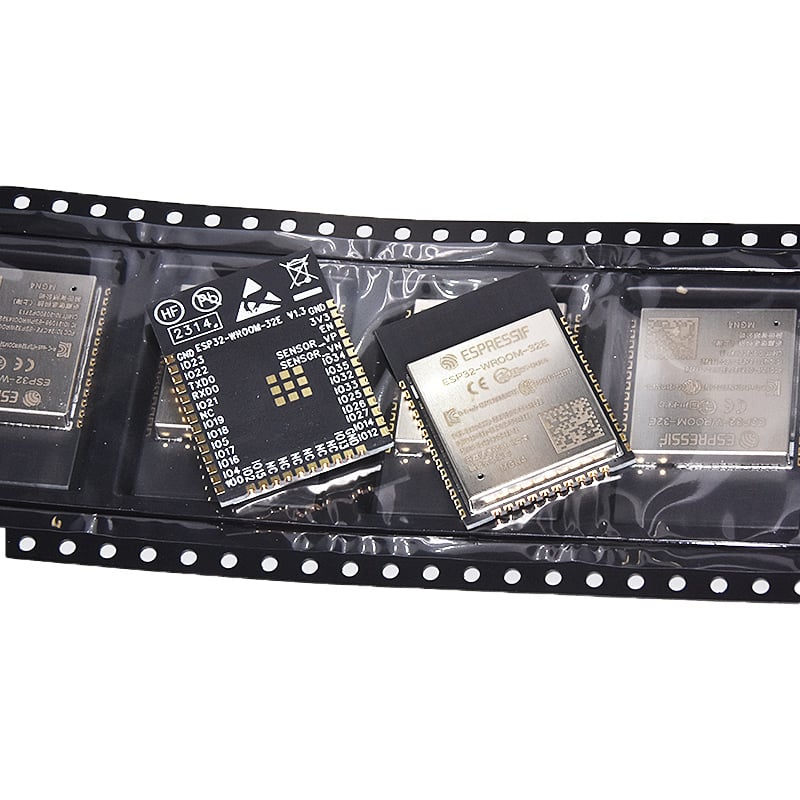
This article explores the most impactful PCBA design features that engineers and procurement specialists should prioritize when specifying or evaluating a printed circuit board assembly. Whether you are developing a consumer device, an industrial controller, or a smart embedded system, the principles below will help you distinguish designs that merely function from those that truly endure. Good PCBA design thinking begins before a single component is placed, and its rewards are felt throughout the entire product lifecycle.
One of the most foundational decisions in any PCBA design is which components to use. Selecting parts rated for the appropriate temperature range, voltage tolerance, and operational lifespan ensures the assembly can handle the demands of its intended environment. Industrial-grade components with extended operational ratings are preferred in applications where thermal cycling, humidity, or vibration are expected factors.
Beyond individual ratings, component sourcing consistency matters enormously. Using well-characterized parts with stable supply chains reduces the risk of lot-to-lot variation affecting board performance. Proper PCBA design always accounts for component obsolescence planning, ensuring that critical parts have either long-term availability or identified drop-in replacements.
Decoupling capacitors placed close to power pins are a small but critical element of reliable PCBA design. They suppress high-frequency noise and stabilize local power supplies for sensitive ICs, preventing erratic behavior during transient load changes. Neglecting this seemingly minor detail can lead to random resets, data corruption, or premature IC failure in deployed products.
Even excellent components can underperform if placed poorly on the board. Effective PCBA design organizes components based on functional grouping, signal flow, and thermal considerations. High-frequency components should be placed away from sensitive analog circuitry to minimize electromagnetic interference, while power components should be positioned to allow efficient heat dissipation.
Keeping signal paths short for high-speed signals reduces parasitic inductance and capacitance, which degrade signal integrity at elevated frequencies. PCBA design best practices recommend placing bypass capacitors within a few millimeters of their associated IC power pins, and ensuring that critical signal traces are not routed near power planes or noisy switching elements.
Component placement also affects the mechanical integrity of the assembly. Heavy components placed near board edges or away from adequate support points are more vulnerable to solder joint fatigue caused by vibration or mechanical shock. A thoughtful PCBA design distributes mass carefully, considering the physical stresses the board will encounter during shipping, installation, and operation.
Heat is one of the primary causes of long-term component degradation and premature PCB assembly failure. A disciplined PCBA design approach incorporates thermal management as a first-class requirement rather than an afterthought. Thermal vias — small plated holes that transfer heat from surface pads through the board to internal copper planes or heat spreaders — are a widely used technique for managing hot spots beneath high-power components.
Copper pours and thermal relief patterns on ground planes also help distribute heat more evenly across the board. For power stages in motor drivers, regulators, or high-current switching circuits, the PCB itself can serve as a significant thermal path when the PCBA design is optimized with adequate copper coverage and trace width sizing for current-carrying capacity.
Selecting components with exposed thermal pads, and ensuring the solder paste stencil design allows proper paste coverage beneath those pads, directly determines how efficiently heat is removed during operation. An experienced PCBA design team will run thermal simulation models before finalizing layout to validate that junction temperatures remain within safe limits under worst-case load conditions.
Products exposed to wide temperature swings — such as outdoor electronics, automotive assemblies, or industrial equipment — face solder joint fatigue over time as different materials expand and contract at different rates. Good PCBA design mitigates this through careful material selection, including choosing PCB substrates with compatible coefficient of thermal expansion values relative to the components being used.
Underfill adhesives applied beneath ball grid array packages provide mechanical reinforcement that dramatically extends solder joint life under thermal cycling conditions. This is a detail that separates a mature PCBA design from one that cuts corners at the assembly stage. The choice between no-clean, water-soluble, or rosin flux also interacts with thermal reliability, as flux residues left beneath closely-spaced packages can trap moisture and accelerate corrosion.
For any digital, RF, or mixed-signal PCBA design, maintaining signal integrity is critical to achieving consistent and predictable performance. Controlled impedance traces — where the width and dielectric properties of the board are carefully matched to achieve a target characteristic impedance — are essential for high-speed data lines such as USB, Ethernet, HDMI, or DDR memory interfaces.
Length-matching of differential pairs is another hallmark of professional PCBA design. When differential signal traces arrive at a receiver at different times due to unequal lengths, the timing skew degrades data eye diagrams and increases bit error rates. Matching these lengths to within fractions of a millimeter is standard practice in quality PCBA design for high-speed communications.
Via stubs on high-speed traces can cause signal reflections that limit bandwidth. Advanced PCBA design techniques such as back-drilling remove these stubs after fabrication, allowing the board to support higher data rates without reflection-induced signal degradation. Understanding when such techniques are justified requires knowledge of the frequency content of the signals and the acceptable bit error rates for the application.
EMC performance is both a regulatory requirement and a real-world reliability factor. A PCBA design that generates excessive electromagnetic emissions can interfere with itself or nearby equipment, while one with poor immunity characteristics may malfunction in electrically noisy environments. Both problems are addressed primarily through design rather than through shielding added after the fact.
Proper ground plane usage is the single most impactful EMC tool available to a PCBA design engineer. A continuous, low-impedance ground plane provides a reference for return currents and significantly reduces both radiated emissions and susceptibility to external interference. Splitting ground planes to separate analog and digital domains requires careful thought, as a poorly executed split can actually worsen EMC performance.
Filter components at power entry points — including ferrite beads, common-mode chokes, and ceramic capacitors — are essential elements of a robust PCBA design strategy for EMC compliance. These are most effective when placed immediately at the point of board entry for power and I/O connections, before the conductors fan out to internal circuitry.
The PCB substrate is the physical foundation of the entire assembly, and its material properties directly influence the durability of the PCBA design. Standard FR4 is adequate for many commercial applications, but high-temperature environments, high-frequency RF designs, or applications requiring low moisture absorption demand specialized materials such as high-Tg FR4, polyimide, or PTFE-based laminates.
Polyimide substrates offer excellent thermal stability and are widely used in flexible PCBA design for wearables, aerospace, and automotive applications where rigid boards cannot accommodate the required form factor or movement. PTFE laminates provide very low dielectric loss, making them the preferred choice for microwave and millimeter-wave circuits where conventional FR4 would introduce unacceptable signal attenuation.
Understanding the dielectric constant and loss tangent of the chosen substrate material is not just relevant for RF designs — it also matters for any PCBA design operating above a few hundred megahertz. These material properties determine how quickly signals travel through the board and how much energy is absorbed as heat, both of which affect system timing and thermal performance.
Conformal coating applied to the assembled board protects the entire PCBA design from moisture, dust, chemical contamination, and low-level condensation. Different coating materials — including acrylic, polyurethane, silicone, and epoxy — offer different levels of chemical resistance, flexibility, and reworkability, and the correct choice depends on the deployment environment and maintenance requirements.
Board stiffeners, edge chamfering, and strategically placed mounting hole reinforcements are mechanical PCBA design features that improve resistance to board flexing during assembly, test, and field use. Excessive board flex can crack solder joints, particularly on large, rigid packages like BGA or LCC components. Designing the board with appropriate thickness and adding mechanical support points reduces these risks significantly.
Fiducial marks and tooling holes are details that facilitate automated assembly processes and contribute to long-term production consistency. A well-considered PCBA design includes these features at the layout stage, ensuring that every batch of boards can be assembled with the same precision and alignment, reducing the variability that leads to subtle reliability differences between production lots.
A PCBA design that cannot be thoroughly tested is a design that ships with unknown quality. Design for testability principles — including the inclusion of test points, boundary scan compatibility, and in-circuit test access — ensure that manufacturing defects and component failures can be detected before products reach end users. Test points should be included for all critical nodes, placed on a uniform grid pitch that is accessible to standard probe fixtures.
Functional test connectors or debug headers left in the PCBA design at accessible locations allow field engineers to diagnose issues in deployed units, dramatically reducing mean time to repair. While these connectors may add a small cost to each board, they provide substantial value over the service life of a product by enabling efficient fault isolation without board-level disassembly.
JTAG and similar boundary scan interfaces are increasingly standard in professional PCBA design for any board containing programmable logic or complex ICs. They allow non-destructive electrical testing of interconnects and provide a mechanism for in-system programming of firmware, which supports both production efficiency and field update capabilities throughout the product lifecycle.
A PCBA design that is difficult to manufacture will suffer from higher defect rates regardless of how well it performs in simulation. Design for manufacturability guidelines — including appropriate pad sizes, solder mask expansion rules, component keepout zones around connectors and board edges, and proper courtyard clearances — make the board compatible with standard automated assembly equipment and processes.
Panel design and board breakout methods also fall under the scope of good PCBA design practice. Choosing between v-score, tab-routed, or perforated breakout methods impacts the stress applied to solder joints near board edges during depanelization. For vibration-sensitive applications or assemblies with connectors near board edges, tab routing with breakaway tabs is generally preferred over v-scoring to minimize mechanical stress transfer.
Solder paste stencil aperture design is a final but critical PCBA design detail that determines whether the correct amount of solder paste is deposited on each pad. Too much paste causes bridging defects; too little causes insufficient joint formation. Working with assembly partners early in the design process to validate stencil aperture ratios against the actual component land patterns is a hallmark of mature PCBA design practice.
Thermal management is arguably the most critical feature for durability in harsh environments. Effective use of thermal vias, copper pours, and appropriate component selection with suitable temperature ratings ensures that heat — the primary cause of premature failure — is managed throughout the operational life of the assembly. Combining thermal design with conformal coating provides a comprehensive approach to environmental resilience in demanding PCBA design applications.
EMC performance is almost entirely determined by PCBA design decisions rather than add-on shielding. A continuous low-impedance ground plane, properly placed filter components at all power and I/O entry points, and disciplined trace routing that minimizes loop areas for high-frequency current paths collectively define how well a board meets EMC requirements. Addressing these factors during layout is far more cost-effective than correcting EMC failures discovered during compliance testing.
Component placement influences signal integrity, thermal performance, EMC behavior, and mechanical reliability simultaneously. Poorly placed components create long signal loops that act as antennas, thermal hot spots that stress adjacent parts, and mechanical vulnerabilities at solder joints subjected to vibration. Quality PCBA design treats component placement as a multi-dimensional optimization challenge rather than a simple space-filling exercise.
Specialized substrates should be evaluated whenever the application involves sustained high temperatures above the Tg of standard FR4, operating frequencies above approximately 1 GHz where dielectric loss becomes significant, mechanical flexibility requirements that rigid boards cannot accommodate, or environments with high moisture exposure where low water absorption is critical. In these cases, the incremental cost of advanced PCBA design materials is justified by the reliability and performance gains they provide over the product's service life.