
Selecting the right microcontroller for your project is a critical decision that can determine the success or failure of your embedded system design. Whether you're developing a simple home automation device or a complex industrial control system, understanding the key factors that influence microcontroller selection will help you make an informed choice. The process involves evaluating performance requirements, power consumption, available peripherals, and development ecosystem support. A well-chosen microcontroller not only meets your current project needs but also provides room for future enhancements and scalability.
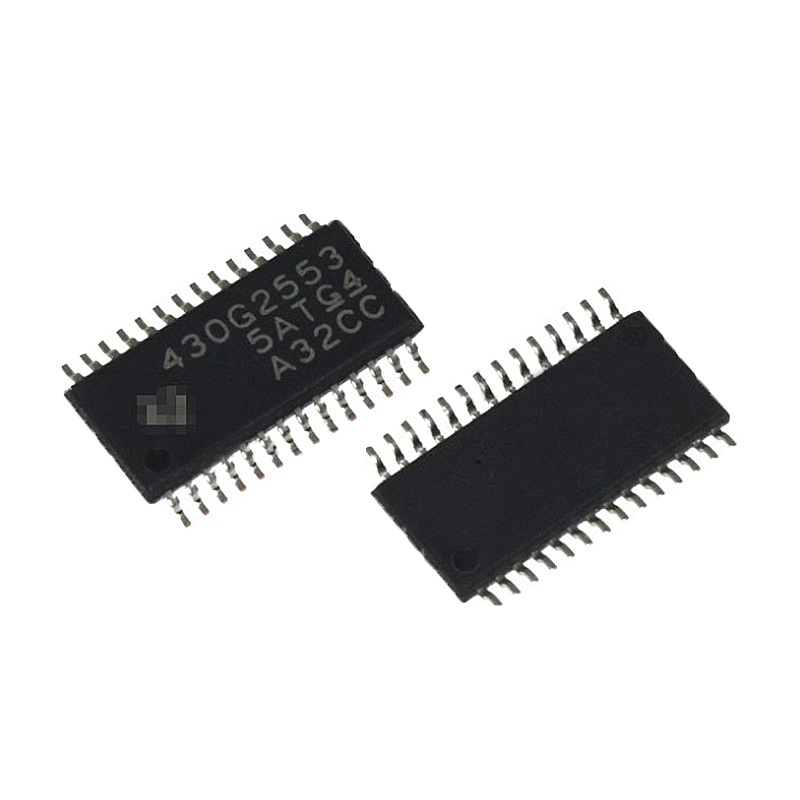
The architecture of a microcontroller fundamentally impacts its performance characteristics and suitability for specific applications. When evaluating different architectures, consider whether your project requires an 8-bit, 16-bit, or 32-bit processing capability. An 8-bit microcontroller typically offers sufficient processing power for simple control tasks, sensor reading, and basic communication protocols. However, more demanding applications involving complex algorithms, real-time signal processing, or extensive data manipulation may require the enhanced computational capabilities of a 16-bit or 32-bit microcontroller.
The instruction set architecture also plays a crucial role in determining programming efficiency and execution speed. RISC-based microcontroller designs generally offer better performance per clock cycle compared to CISC architectures, making them ideal for time-critical applications. Additionally, consider the availability of hardware multipliers, floating-point units, and digital signal processing capabilities if your project involves mathematical computations or signal processing tasks.
Memory architecture represents another fundamental aspect of microcontroller selection that directly impacts your project's functionality and expandability. Program memory, typically implemented as Flash memory, must be sufficient to accommodate your application code, including any future updates or feature additions. Data memory, usually SRAM, needs to handle variable storage, stack operations, and buffer management for communication protocols. A well-designed microcontroller selection process involves estimating memory requirements with at least 50% overhead to account for code growth and debugging needs.
Some microcontroller families offer external memory interfaces that allow expansion beyond internal memory limits. This feature becomes particularly valuable for applications requiring large lookup tables, data logging capabilities, or complex user interfaces. Consider whether your project benefits from memory protection units, cache systems, or direct memory access controllers that can enhance overall system performance and reliability.
Power consumption characteristics significantly influence microcontroller selection, especially for battery-powered or energy-harvesting applications. Modern microcontroller designs incorporate multiple power modes, ranging from active operation to deep sleep states with minimal current draw. Evaluate the power consumption in each operating mode and determine how frequently your application can utilize low-power states to extend battery life. Some advanced microcontroller units offer sophisticated power management features, including dynamic voltage scaling and clock gating, which optimize energy consumption based on processing demands.
Wake-up mechanisms and interrupt handling capabilities also impact overall power efficiency. A microcontroller with efficient interrupt processing can quickly transition between sleep and active modes, minimizing the time spent in high-power states. Consider peripherals that can operate independently of the main processor core, allowing the system to perform essential functions while maintaining the processor in a low-power state.
Operating voltage requirements influence both power consumption and system design complexity. Lower voltage microcontroller options, such as those operating at 1.8V or 2.5V, generally consume less power but may require additional voltage regulation circuitry. Higher voltage options, typically 3.3V or 5V, often provide better noise immunity and simpler interfacing with legacy components. Consider the voltage levels of sensors, actuators, and communication interfaces in your system to minimize the need for level shifting circuits.
Environmental factors, including operating temperature range, humidity tolerance, and electromagnetic interference susceptibility, should align with your project's deployment conditions. Industrial-grade microcontroller variants offer extended temperature ranges and enhanced reliability features suitable for harsh operating environments. Automotive-qualified options provide additional safety and reliability certifications required for vehicle applications.
The availability and variety of communication peripherals integrated into a microcontroller directly impact system design complexity and component count. Standard communication protocols such as UART, SPI, and I2C are essential for interfacing with sensors, displays, and other system components. More advanced applications may require specialized communication interfaces like CAN bus for automotive applications, USB for device connectivity, or Ethernet for network-enabled systems. A comprehensive microcontroller evaluation should consider both current communication requirements and potential future expansion needs.
Wireless connectivity options, including built-in Wi-Fi, Bluetooth, or sub-GHz radio modules, can significantly simplify system design for IoT and connected device applications. However, integrated wireless capabilities often come with increased power consumption and higher costs, making external wireless modules more suitable for some applications. Evaluate the trade-offs between integration convenience and design flexibility when considering wireless-enabled microcontroller options.
Analog-to-digital converters represent critical peripherals for applications involving sensor interfacing and signal measurement. Consider the resolution, sampling rate, and number of ADC channels required for your application. Some microcontroller families offer advanced ADC features such as differential inputs, programmable gain amplifiers, or simultaneous sampling capabilities that can enhance measurement accuracy and system performance. Digital-to-analog converters, while less common, provide essential functionality for applications requiring analog output generation or reference voltage generation.
Timer and counter peripherals enable precise timing control, pulse-width modulation generation, and event counting functionality. Advanced timer configurations, including complementary PWM outputs with dead-time insertion, support motor control applications and power electronics designs. Some microcontroller units incorporate specialized peripherals such as comparators, operational amplifiers, or touch sensing controllers that can reduce external component requirements and improve system integration.
The quality and accessibility of development tools significantly impact project development time and debugging efficiency. Comprehensive integrated development environments provide code editing, compilation, debugging, and programming capabilities in a unified platform. Consider the availability of free or low-cost development tools, especially for prototype development and small-scale projects. Professional development environments often offer advanced features such as real-time trace, code coverage analysis, and performance profiling that accelerate development and improve code quality.
Hardware debugging capabilities, including in-circuit debugging and programming interfaces, enable efficient code development and troubleshooting. Some microcontroller families support advanced debugging features such as instruction trace, data watchpoints, and real-time variable monitoring. Evaluate the availability and cost of development boards, programmers, and debugging probes when calculating total development costs.
Comprehensive software libraries and middleware can significantly accelerate development by providing pre-tested implementations of common functions and communication protocols. Manufacturer-provided libraries, real-time operating systems, and third-party software stacks reduce development time and improve code reliability. Consider the availability of code examples, application notes, and reference designs that demonstrate microcontroller capabilities and provide starting points for development.
Community support and online resources contribute valuable knowledge sharing and troubleshooting assistance throughout the development process. Active user communities, technical forums, and educational resources help developers overcome challenges and learn best practices. Some microcontroller families benefit from extensive third-party support, including additional development tools, libraries, and educational materials that complement manufacturer resources.
Microcontroller cost evaluation extends beyond the initial component price to include development costs, toolchain expenses, and long-term support considerations. While higher-performance microcontroller options may have elevated unit costs, they often reduce external component requirements and development time, potentially lowering total system costs. Consider the impact of integrated peripherals on bill-of-materials costs and PCB complexity when comparing different microcontroller options.
Volume pricing and long-term availability represent critical factors for commercial product development. Establish relationships with authorized distributors and understand volume pricing tiers to accurately estimate production costs. Some microcontroller families offer migration paths between different performance levels within the same architecture, providing flexibility for cost optimization and feature scaling across product variants.
Supply chain stability and product longevity ensure continued availability throughout your product's lifecycle. Research manufacturer commitments to long-term support and product availability, especially for applications requiring extended support periods. Some microcontroller suppliers provide specific longevity guarantees or migration support for end-of-life products, reducing risks associated with component obsolescence.
Geographic distribution of manufacturing and supply chain networks impacts component availability and delivery times. Consider multiple sourcing options and regional availability when selecting microcontroller components for global product distribution. Supply chain diversification strategies help mitigate risks associated with regional disruptions or manufacturer-specific issues.
Real-time applications demand predictable and deterministic microcontroller behavior to meet strict timing requirements. Evaluate interrupt response times, context switching overhead, and instruction execution determinism when selecting microcontroller options for time-critical applications. Some microcontroller architectures provide enhanced real-time capabilities through dedicated interrupt controllers, priority-based scheduling support, or hardware-assisted context switching mechanisms.
Safety-critical applications may require microcontroller families with functional safety certifications and built-in self-test capabilities. These specialized microcontroller variants often incorporate redundant processing elements, error detection and correction mechanisms, and fail-safe operating modes that ensure system reliability in critical applications. Consider certification requirements and safety standards compliance early in the selection process to avoid costly redesigns.
Microcontroller selection should accommodate both current project requirements and anticipated future enhancements. Pin-compatible family members with varying performance levels enable easy migration between different capability levels without requiring PCB redesigns. Some microcontroller families offer software compatibility across different performance tiers, allowing code reuse and simplified product variant development.
Expansion capabilities, including additional communication interfaces, increased memory capacity, and enhanced processing power, provide flexibility for product evolution and feature additions. Consider microcontroller options that support modular expansion through standardized interfaces or companion chips that extend functionality while maintaining design consistency.
The most important factor depends on your specific application requirements, but performance versus power consumption trade-offs typically drive microcontroller selection decisions. For battery-powered devices, energy efficiency becomes paramount, while real-time control applications prioritize processing speed and deterministic behavior. Consider your project's primary constraints and optimization targets to identify the most critical selection criteria. A balanced approach evaluating processing requirements, power consumption, peripheral needs, and development ecosystem support usually yields the best results.
Memory estimation requires analyzing both program code size and data storage requirements throughout your application's operation. Start by implementing core functionality and measuring actual memory usage, then add substantial margins for debugging, future features, and optimization changes. Consider stack requirements for interrupt handling and function calls, buffer space for communication protocols, and any data logging or configuration storage needs. A good practice involves selecting a microcontroller with at least twice the estimated memory requirements to accommodate growth and development overhead.
Changing microcontroller families during development is possible but often involves significant redesign effort and cost increases. Hardware changes may require PCB layout modifications, component selection updates, and pin assignment revisions. Software migration involves adapting device drivers, peripheral configurations, and potentially modifying application code to accommodate different architectures or capabilities. To minimize migration risks, choose microcontroller families with multiple performance options and pin-compatible variants that enable easy upgrades without major design changes.
Essential development tools include an integrated development environment with compiler support, a hardware programmer or debugger, and development boards for prototyping and testing. Most microcontroller manufacturers provide free or low-cost development environments with basic debugging capabilities. Advanced projects benefit from hardware debuggers with real-time trace capabilities, logic analyzers for signal analysis, and oscilloscopes for timing verification. Consider tool costs and learning curves when budgeting for development resources, especially for small-scale projects or educational applications.